

By Staff Writer
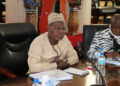
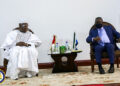
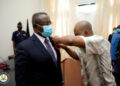
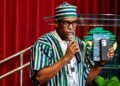
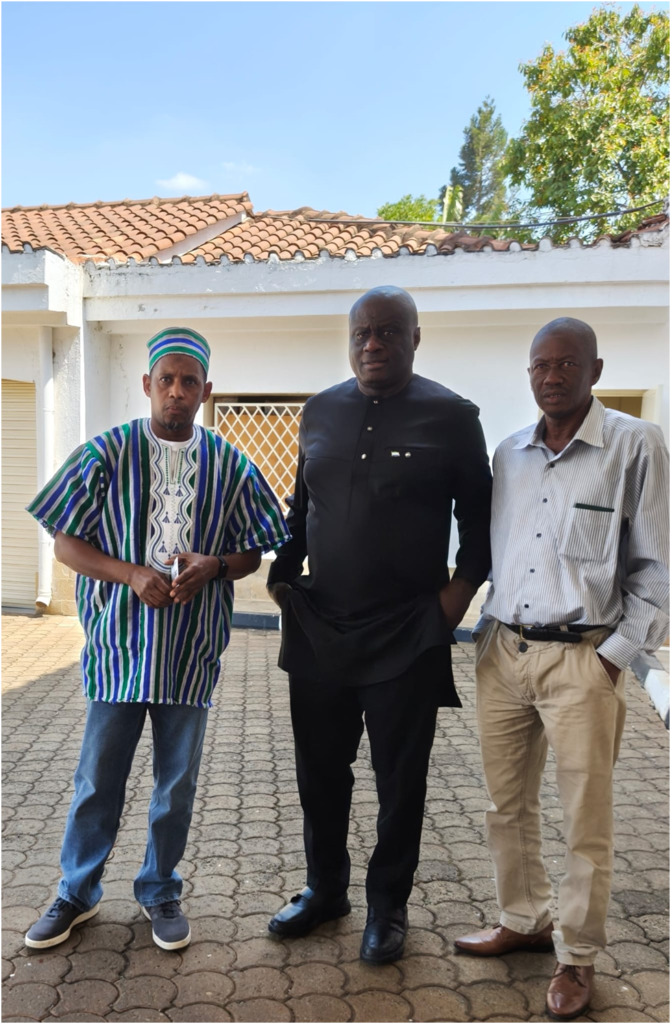
Award-winning Sierra Leonean journalist, Bai-Bai Sesay and author of Mr President Can We Talk?, A Citizen’s Conversation with Power, Alpha Amadu Jalloh, on Monday paid a courtesy call on H.E. Lieutenant General (Rtd) Peter K. Lavahun, Sierra Leone’s High Commissioner to Kenya and Permanent Representative to UNEP and UN-Habitat, at the Sierra Leone High Commission in Nairobi.
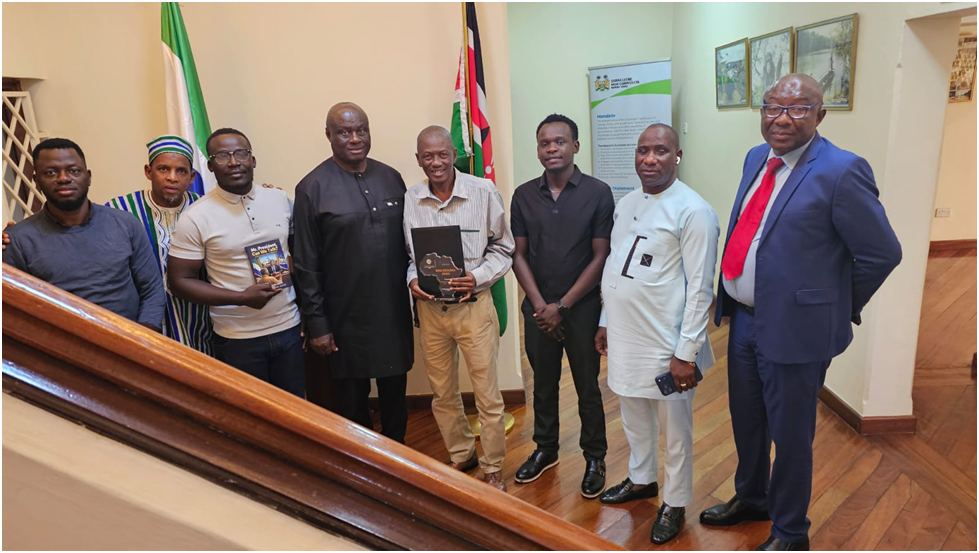
The two Sierra Leoneans were warmly received by the High Commissioner and senior officials of the Mission, including Minister Plenipotentiary Mr. Abdul Karim Kargbo and Information Attaché Mr. Abu Bakar Dakowa.
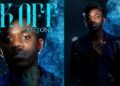
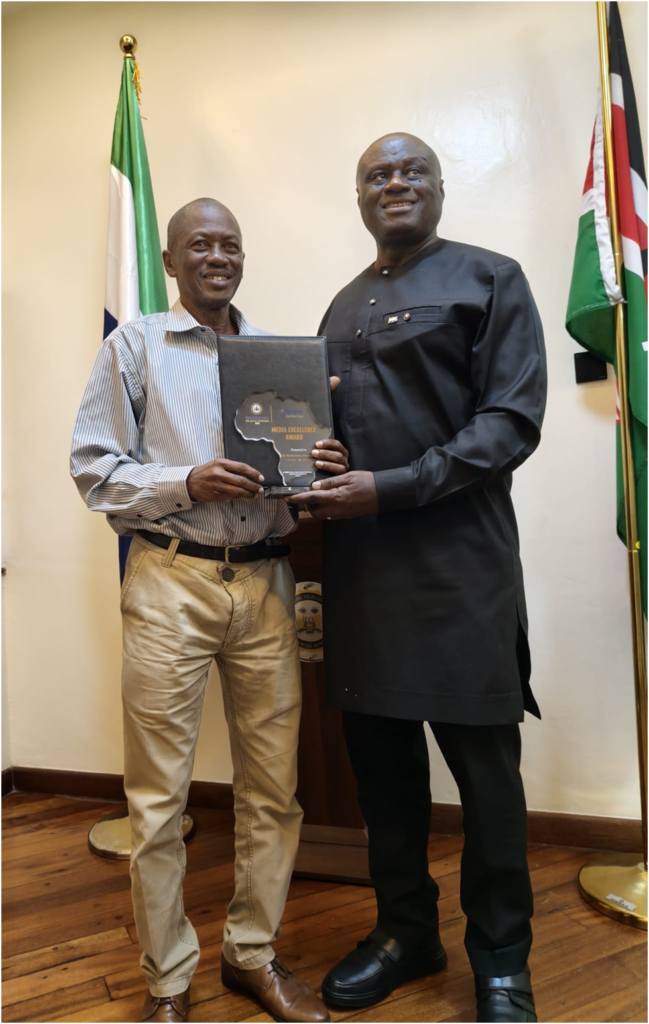
The courtesy call followed a remarkable period for the two men in Nairobi. Bai-Bai Sesay had received the SMEAfrica Media Excellence Award in recognition of his contribution to journalism, while Alpha Amadu Jalloh had successfully launched his book, Mr President Can We Talk?, A Citizen’s Conversation with Power, the previous Friday.
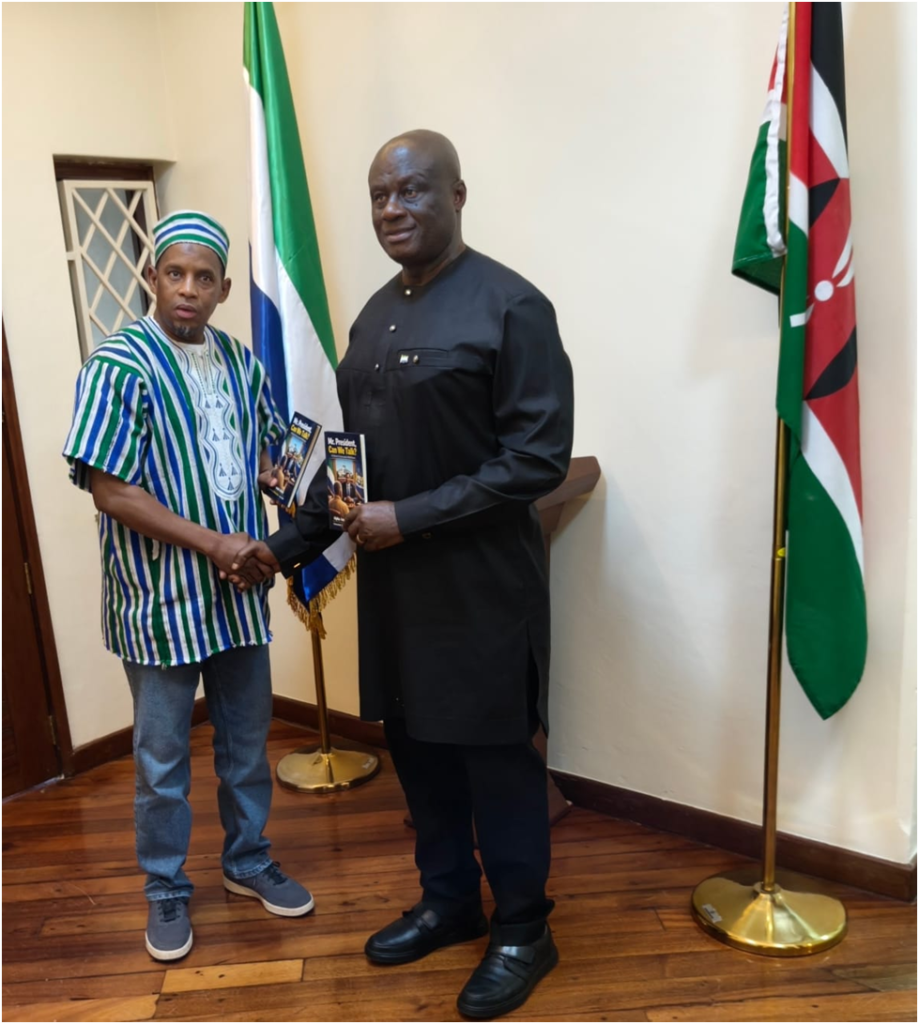
During the meeting, Bai-Bai Sesay formally presented his award to the High Commissioner, while Alpha Amadu Jalloh presented a signed copy of his book and briefed the Mission on the successful Nairobi launch.
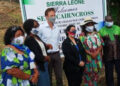
Before their visit to the High Commission, the two men had also been warmly welcomed by the Sierra Leonean community based in Nairobi, together with Sierra Leoneans who travelled from Somalia. Under the leadership of Mr. Tennyson Williams, Chairman of the Sierra Leonean Community in Kenya, the community organised a launch and reception in their honour.
The gathering demonstrated the strength of Sierra Leonean solidarity beyond the country’s borders and provided an opportunity for compatriots living in East Africa to celebrate the achievements of two Sierra Leoneans making their mark in journalism, literature and public discourse on the African continent.
The Nairobi launch of Mr President Can We Talk? also attracted prominent African voices, including renowned Pan-Africanist Professor P.L.O. Lumumba, who underscored the continental relevance of the publication.
Professor Lumumba called for the book to reach leaders across Africa, urging that copies be sent to all 54 African Heads of State. His intervention reinforced the wider message of the book: that conversations about leadership, accountability, citizenship and governance should not be confined to Sierra Leone.
In his remarks during the courtesy call, High Commissioner Lavahun congratulated Bai-Bai Sesay and Alpha Amadu Jalloh for raising Sierra Leone’s flag on the continental stage.
He described their achievements as a proud moment for Sierra Leone and particularly for the country’s media, literary and intellectual communities. He encouraged both men to continue using journalism and literature as instruments for national development, constructive engagement and the positive projection of Sierra Leone internationally.
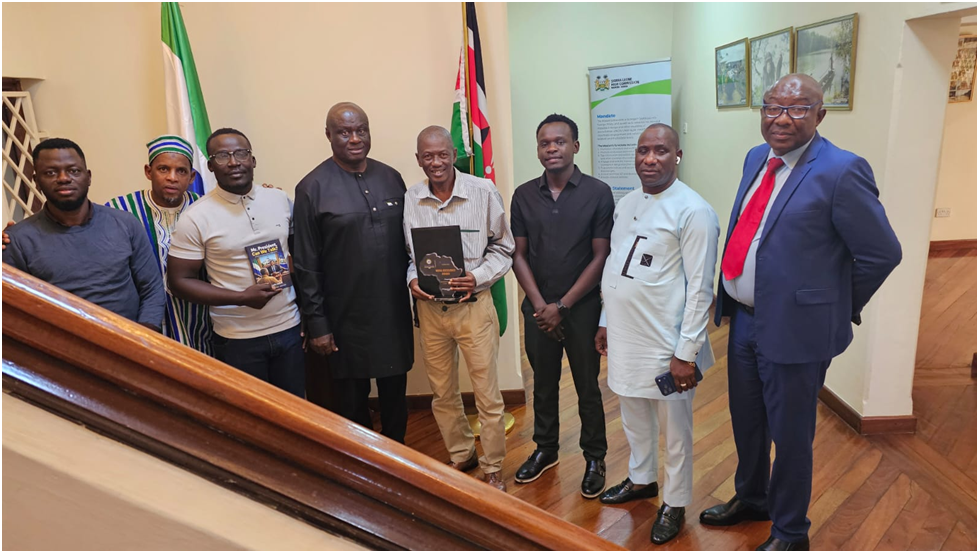
The High Commissioner particularly urged Alpha Amadu Jalloh to replicate the launch of Mr President Can We Talk? in Sierra Leone so that citizens at home could have an opportunity to engage with the publication and the important national questions it raises.
The call for a Sierra Leone launch is significant. While Nairobi provided the book with an important continental platform, the conversation at the heart of the publication belongs equally at home. A book that asks whether citizens can speak openly and constructively with those entrusted with political power should encourage dialogue among citizens, journalists, civil society, academics, young people and political leaders.
Bai-Bai Sesay’s recognition also carries significance beyond the award itself. His achievement demonstrates that Sierra Leonean journalism continues to find recognition beyond the country’s borders. At a time when journalism across Africa faces enormous political, financial and technological pressures, continental recognition of a Sierra Leonean journalist should serve as encouragement to professionals and young journalists at home.
Responding to the High Commissioner, Bai-Bai Sesay and Alpha Amadu Jalloh expressed their appreciation for the reception and commended High Commissioner Lavahun’s transformational leadership, noting that the Sierra Leone High Commission in Kenya has been repositioned to meet modern diplomatic standards.
They encouraged him to continue strengthening the Mission’s engagement with Sierra Leoneans living in Kenya and in the other countries to which the High Commission is accredited.
The leadership shown by Mr. Tennyson Williams and the Sierra Leonean community in Kenya provides another important part of this story. Their decision to welcome their compatriots and organise a launch in their honour demonstrated what diaspora communities can accomplish when they come together around national achievement. The participation of Sierra Leoneans from Somalia added further significance to the occasion, showing that distance does not have to weaken the bonds connecting Sierra Leoneans to one another or to their country.
There is something particularly encouraging about Sierra Leoneans gathering abroad not because of political disagreement, crisis or tragedy, but to celebrate the achievements of fellow citizens.
Sierra Leone needs more of such moments.
A journalist receiving continental recognition should be celebrated. An author carrying Sierra Leonean ideas onto a wider African platform should be encouraged. Diaspora communities supporting the achievements of compatriots should be recognised. And diplomatic missions opening their doors to citizens making positive contributions should become an increasingly visible part of Sierra Leone’s diplomacy.
National pride and critical citizenship should never be regarded as opposites. It is entirely possible to love Sierra Leone while questioning its leadership, demanding accountability and calling for better governance. Constructive criticism is often strongest when it comes from citizens deeply invested in their country’s future.
This is perhaps the larger significance of what unfolded in Nairobi.
Bai-Bai Sesay carried recognition for Sierra Leonean journalism. Alpha Amadu Jalloh carried a book asking leaders and citizens to engage in an honest conversation about power. The Sierra Leonean community in Kenya, supported by compatriots from Somalia, rallied around them. Professor P.L.O. Lumumba challenged the message of the book to travel throughout Africa. And Sierra Leone’s High Commissioner in Kenya welcomed them to the country’s diplomatic Mission and encouraged the conversation to be taken home.
These moments should go beyond photographs, handshakes and congratulatory messages. The award should inspire another generation of Sierra Leonean journalists. The book should provoke meaningful conversations. The diaspora should remain connected to national development. The High Commission should continue opening its doors to Sierra Leoneans making positive contributions across its areas of accreditation.
Most importantly, Sierra Leone should recognise that some of its most effective ambassadors are its own citizens who continue to carry the country’s name with pride wherever they find themselves.
In Nairobi, journalism, literature, community and diplomacy came together around Sierra Leone.
And through it all, the Green, White and Blue continued to fly.