



By Ibrahim Sanda Barrie
The Gadfly – Challenging ideas, questioning power, and promoting democratic dialogue
The 1991 Constitution cannot be reviewed by the very institutions whose power it is supposed to restrain.
Sierra Leone is approaching another constitutional crossroads.
The question before the country is not simply whether the 1991 Constitution should be amended. The deeper question is who should be trusted to examine the constitutional architecture of the state before deciding what should change?
That distinction matters.
A constitutional review is not the same thing as passing an amendment.
Parliament has constitutional authority to amend the Constitution under Section 108. Depending on the provision concerned, that process may require a two-thirds parliamentary majority and, for entrenched provisions, approval through a national referendum.
But Parliament’s power to amend the Constitution does not necessarily mean that Parliament should control the entire process by which the nation decides what the Constitution ought to become.
The same principle applies to the Executive and Judiciary.
The President has constitutional responsibilities. Parliament has legislative authority. The Judiciary has the responsibility of interpreting and protecting the Constitution.
But none of these institutions owns the Constitution.
The Constitution belongs to the people.
And that should be the starting point of any serious discussion about its future.
Sierra Leone has been here before
There is a tendency to speak about constitutional review as though Sierra Leone is preparing to do something entirely new.
It isn’t.
The country has already attempted major constitutional reviews on several occasions.
The Tucker Review of 2007–2008 was one such effort.
Then came the Constitutional Review Committee chaired by Justice Edmond Cowan, established in 2013 and composed of approximately 80 members drawn from different sectors of society. The committee conducted extensive consultations and eventually produced its report.
The process did not end there.
The report entered the political machinery of government and was followed by a prolonged period of executive consideration. The eventual 2017 White Paper rejected or accepted recommendations in varying degrees, while much of the reform agenda remained unresolved.
That history should trouble anyone who believes that simply establishing another committee will solve Sierra Leone’s constitutional problem.
The country does not merely have a constitutional-review problem.
It has a constitutional-process problem.
We have repeatedly generated recommendations without creating a sufficiently independent mechanism capable of carrying them through the political system and back to the people.
The Truth and Reconciliation Commission had already understood the importance of this problem. It recommended constitutional revision through a broad, consultative and participatory process.
The lesson is difficult to ignore.
Constitutional reform cannot be reduced to an exercise among politicians, lawyers and government officials in Freetown.
Review is not amendment
This distinction needs to be placed at the centre of the national conversation.
A constitutional review asks:
What is working?
What is failing?
What has changed in Sierra Leone since 1991?
What new threats to democracy have emerged?
What rights require stronger protection?
How should power be distributed?
How should institutions be held accountable?
What constitutional arrangements are producing conflict or political instability?
An amendment, by contrast, is the legal act of changing a particular constitutional provision.
The first is primarily a process of national examination and deliberation.
The second is a process of constitutional law-making.
Parliament must retain the authority assigned to it by Section 108.
But there is no logical reason why Parliament must therefore be the sole institution examining the Constitution before Parliament itself considers amendments.
Indeed, that would raise an uncomfortable question:
Who reviews the reviewers?
The problem of institutional self-interest
This is where constitutional theory becomes practical.
Every institution has interests.
The Executive has an interest in executive power.
Parliament has an interest in parliamentary power.
The Judiciary has an interest in judicial power.
Political parties have interests in electoral rules.
Incumbent politicians have interests in the rules governing political succession.
None of this means that every politician, judge or public official is acting dishonestly.
It means something more fundamental.
Institutions respond to incentives.
That is one of the oldest insights in constitutional thought.
Madison’s concern about concentrated power was built around the recognition that political institutions must be designed with human nature in mind.
The Constitution therefore cannot simply depend upon the goodwill of those who exercise power.
It must create structures that make the abuse of power more difficult.
This is the logic behind separation of powers, checks and balances and constitutional limitations.
It is also why an institution should not necessarily be allowed to determine the rules governing its own authority without independent scrutiny.
The question is not whether Parliament should participate.
It should.
The question is whether Parliament should dominate the review.
The answer should be no.
The question is not whether the President should have a role.
The Constitution may require it.
The question is whether State House should control the review process.
Again, the answer should be no.
And the Judiciary?
It should provide constitutional expertise and eventually interpret the Constitution.
But sitting judges should not become the political authors of the constitutional settlement they may later be required to interpret.
The referee should not be designing the rules of the game while preparing to referee the match.
The greatest mistake would be to create another government committee
Sierra Leone should resist the temptation to establish another body whose composition and mandate are effectively determined by the Executive.
There is nothing inherently wrong with government establishing a review commission.
The problem arises when government becomes its gatekeeper.
If the President chooses the commissioners, controls the terms of reference, determines the timetable, controls the publication of recommendations and ultimately decides which proposals reach Parliament, then the country has not created an independent constitutional review process.
It has created an executive advisory committee.
There is a difference.
And Sierra Leone has already experienced the consequences of that distinction.
The Cowan Committee did extensive work.
Citizens were consulted.
Recommendations were produced.
And yet the country waited years for the political process to determine what would happen to them.
That experience should not be repeated.
The lesson of the 2013–2017 process is therefore not that constitutional commissions are useless.
It is that a constitutional review mechanism without sufficient institutional independence can produce excellent recommendations and still fail to produce constitutional change.
So who should constitute the commission?
Sierra Leone needs an Independent National Constitutional Review Commission.
But its legitimacy should begin with how its members are selected.
The President should not have unilateral appointment power.
Parliament should not have unilateral appointment power.
The Judiciary should not have unilateral appointment power.
Instead, there should be a transparent selection mechanism involving respected representatives of Sierra Leonean society.
The commission should include constitutional lawyers and legal scholars.
But it should not be a lawyers’ club.
It should include academics.
But it should not become an ivory-tower conference.
It should include political parties.
But political parties should not control it.
It should include women, youth, traditional leaders, religious communities, trade unions, professional bodies, civil society organisations, journalists, persons with disabilities, business associations and representatives of the diaspora.
Regional and district voices must be heard.
The rural citizen must have the same constitutional dignity as the Freetown professional.
The market woman must have a voice.
The farmer must have a voice.
The teacher must have a voice.
The student must have a voice.
The person living with disability must have a voice.
The unemployed young person must have a voice.
The Sierra Leonean abroad must have a voice.
Because the Constitution regulates all of them.
Political parties must participate, but they must not own the process
There is a temptation in arguments for independence to exclude political parties altogether.
That would be a mistake.
Political parties are legitimate constitutional actors.
APC, SLPP and other parties must be part of the conversation.
But they should have representation within a plural commission rather than control over it.
Otherwise, constitutional reform becomes another arena for partisan competition.
The Constitution must be larger than whichever party occupies State House.
It must be larger than the opposition.
It must be larger than the electoral cycle.
A constitution written for today’s government becomes tomorrow’s political trap.
Sierra Leone needs a constitutional settlement capable of surviving changes of government.
What about the international community?
Sierra Leone should not surrender constitutional ownership to international organisations.
But neither should it reject international expertise.
The African Union, ECOWAS and the Mano River Union could provide technical and moral support.
International constitutional scholars and institutions such as International IDEA and the Venice Commission could provide comparative expertise and procedural guidance.
But their role should be advisory.
Sierra Leoneans must write Sierra Leone’s constitutional future.
The international community can help guarantee the integrity of the process.
It should not determine its outcome.
The Judiciary needs independence from the review process too
This point deserves particular attention.
Constitutional review requires lawyers.
It requires constitutional scholars.
It requires judges and former judges.
But there is an important distinction between legal expertise and institutional control.
Retired judges can provide enormous value.
Former judicial officers can advise on constitutional interpretation and institutional design.
Constitutional scholars can examine comparative systems.
But sitting judges should not dominate the political negotiation of constitutional reform.
Their institutional independence is itself something the Constitution must protect.
A judiciary that participates in negotiating constitutional provisions and later interprets those provisions could face unnecessary questions about institutional impartiality.
Keeping those roles distinct strengthens the Judiciary.
It does not weaken it.
The referendum question must also be understood correctly
One of the most common misunderstandings in the constitutional debate is the suggestion that every constitutional amendment requires a referendum.
That is incorrect.
Section 108 establishes different procedures depending on the provision being amended.
Some constitutional provisions are entrenched and require additional safeguards, including a referendum.
Other provisions can be amended through the parliamentary procedure prescribed by the Constitution without a referendum.
This distinction matters because constitutional reform must be legally precise.
The argument for greater public participation cannot be built upon an incorrect description of the amendment procedure.
Instead, the case should be stronger:
Even where the Constitution does not legally require a referendum, Sierra Leone may still choose to conduct broad public consultation as part of a legitimate constitutional review.
Legal necessity and democratic wisdom are not always the same thing.
The real question is not who has legal power
It is tempting to reduce the debate to a technical question:
Who has the constitutional authority to amend the Constitution?
The answer is largely clear.
Parliament has that authority under Section 108, subject to the prescribed procedures.
But constitutional democracy asks another question:
Who should participate in deciding what deserves to be amended in the first place?
That question has a much broader answer.
The people.
Constitutional scholarship increasingly recognises that constitutional legitimacy depends not only on the formal legality of the final document but also on the legitimacy of the process through which it is produced.
Andrew Arato’s work on constitution-making highlights the importance of negotiated and participatory processes in establishing democratic legitimacy.
Jon Elster’s work reminds us that constitution-making involves strategic bargaining and self-interest.
Ginsburg, Elkins and Blount’s research demonstrates that citizen participation can contribute to constitutional legitimacy, while also cautioning against the simplistic assumption that only mass participation produces durable constitutions.
That last point is important.
We should not romanticise public participation.
Elite-negotiated constitutions can also endure.
The answer, therefore, is not to replace expertise with populism.
It is to combine expertise with participation.
Sierra Leone needs lawyers and ordinary citizens.
It needs politicians and civil society.
It needs judges and academics.
It needs traditional authorities and young people.
It needs national experience and international comparative knowledge.
The objective should be neither elite control nor uninformed populism.
It should be informed popular constitutionalism.
Sierra Leone cannot afford another five-year constitutional limbo
The experience of the Cowan Committee should be treated as a warning.
A commission can spend years travelling around the country.
It can hold consultations.
It can receive thousands of submissions.
It can produce hundreds of recommendations.
It can generate enormous public expectations.
And then everything can become trapped in political delay.
That is unacceptable.
The next process needs legally defined timelines.
Its report should be automatically published.
Public submissions should be accessible.
The government should be required to respond publicly to recommendations.
Parliament should be required to debate the report within a defined period.
Where amendments require a referendum, the public should receive adequate time and information before voting.
There should be no opportunity for a constitutional review report to disappear quietly into the archives of government.
Sierra Leone needs a constitutional settlement, not constitutional tinkering
The 1991 Constitution has served the country through war, peace, political transition, democratic elections and profound social change.
But Sierra Leone in 2026 is not Sierra Leone in 1991.
The country has changed.
The economy has changed.
Technology has changed.
The political environment has changed.
The relationship between citizens and government has changed.
The nature of security threats has changed.
The role of young people has changed.
The place of women in public life has changed.
The global economy has changed.
The constitutional conversation must therefore change as well.
But changing the Constitution should not mean changing it whenever the government of the day encounters an inconvenient provision.
Nor should it mean allowing opposition parties to redesign the Constitution solely for their electoral advantage.
Nor should it mean asking judges to redesign the judiciary.
Nor should it mean asking Parliament to write the rules governing Parliament without independent public scrutiny.
The Constitution must be treated as something much more serious.
It is the architecture of the Republic.
And before we rebuild the house, we must ask the people who live in it what is broken.
A final proposal
Sierra Leone should establish an independent constitutional review commission through a transparent, multi-stakeholder selection process.
Its mandate should be established by law.
Its proceedings should be public.
Its membership should reflect the diversity of the country.
Its commissioners should have security of tenure and protection from arbitrary removal.
Its funding should be independently administered.
Its report should be published in full.
Its recommendations should be subjected to public debate.
Parliament should retain its constitutional authority under Section 108.
The President should exercise only the constitutional powers assigned to that office.
The Judiciary should retain its constitutional role as interpreter and guardian of the law.
And where the Constitution requires the people to decide, the people must decide.
That is the balance Sierra Leone needs.
Not a constitutional process controlled by State House.
Not one controlled by Parliament.
Not one controlled by judges.
Not one controlled by political parties.
And not one dictated by foreign institutions.
A Sierra Leonean constitutional process, owned by Sierra Leoneans, informed by constitutional expertise, protected from institutional capture and ultimately accountable to the people.
The question should therefore no longer be:
“Who has the power to amend the Constitution?”
That question already has an answer.
The more important question is:
“Who should have the power to tell Sierra Leone what its Constitution ought to become?”
The answer should be neither State House nor Parliament nor the Judiciary.
It should begin with the people.
Because the Constitution is not a gift from government to citizens.
It is the people’s instrument for governing government.
_By The GADFLY
Ibrahim Sanda Barrie
The Gadfly asks the questions power would rather bury.
He disturbs comfortable assumptions, interrogates authority, and refuses to confuse silence with peace.
His loyalty is not to personalities or political parties, but to truth, justice and the public interest.
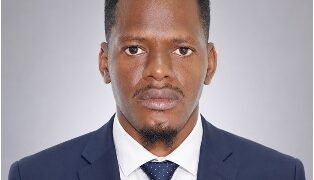
About the Author: Ibrahim Sanda Barrie is a polymathic researcher, peacebuilding savant, perspicacious writer, governance theorist, indefatigable advocate, and institutional reformist.
Gadfly
contact:+251907112129
Email:ibrahimgadfly@gmail.com