


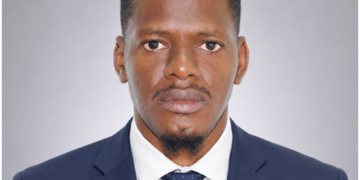


By Ibrahim Sanda Barrie
The Gadfly – Challenging ideas, questioning power, and promoting democratic dialogue
When Stinking Police Stations, Potholes and Decaying Institutions Become a Mirror of the State
There is a smell that no government press release can hide.
Walk into a neglected police station and sometimes the first thing that confronts you is not the law, security or justice.
It is the smell.
The smell of an unclean toilet. Damp walls. Poor ventilation. Overcrowded cells. Broken furniture. Stagnant water. A building that looks as though nobody in authority has bothered to ask whether the people working and being held there deserve better.
That smell is more than unpleasant.
It is political.
A police station is one of the places where ordinary citizens meet the state at its most vulnerable and most powerful. Victims report crimes there. Suspects are detained there. Investigations begin there. People go there looking for protection.
So what does it say when the physical environment itself looks abandoned?
This is where the Broken Windows Theory offers Sierra Leone a useful way of thinking about institutional decay.
James Q. Wilson and George L. Kelling introduced the theory in 1982. Their argument was that visible disorder can send a signal that nobody is in charge and that standards are no longer being enforced. The theory’s original claims about crime have since been debated, and it would be wrong to suggest that a dirty building automatically produces criminal behaviour.
But there is a broader lesson that Sierra Leone should take seriously:
What a society repeatedly allows to deteriorate eventually becomes what that society learns to accept.
And we are accepting far too much.
The republic of broken things
Look around Sierra Leone.
Potholes that survive for years.
Drains packed with rubbish.
Government buildings with leaking roofs, broken toilets and crumbling walls.
Public offices where basic facilities are treated as luxuries.
Schools struggling with infrastructure that should be routine.
And police stations where officers expected to enforce law and order sometimes work in conditions that undermine the dignity of the very institution they represent.
The problem is not that things break.
Things break everywhere.
The problem is that we leave them broken for too long.
That is where neglect becomes political.
The police station that smells of neglect
A police station should inspire a degree of confidence.
It should be clean. It should be orderly. It should be functional. It should provide a reasonable environment for officers, complainants and detainees.
Instead, some stations have become symbols of institutional strain.
This should not be used as an excuse to attack police officers.
Many officers are themselves victims of the problem. They cannot be expected to create professional environments when the state fails to provide the basic conditions in which professionalism can flourish.
You cannot demand discipline from an institution while ignoring the conditions under which its personnel work.
You cannot demand better policing while allowing the places from which policing is administered to deteriorate.
And you cannot ask citizens to trust an institution while presenting them with physical evidence of neglect every time they walk through its doors.
The politics of the broken toilet
There is something revealing about the way governments think about infrastructure.
Politicians love new buildings.
They love ceremonies.
They love plaques.
They love ribbon-cuttings.
They love photographs standing in front of newly constructed facilities.
But maintenance is less exciting.
Nobody holds a major ceremony because a police station’s toilet was cleaned.
Nobody gives a presidential speech because a drainage channel was cleared.
Nobody campaigns on the fact that a government building’s roof no longer leaks.
Yet these are precisely the things that determine whether public institutions actually work.
Construction gives politicians something to show.
Maintenance gives citizens something to rely on.
There is a difference.
The pothole that became a landmark
Consider the ordinary pothole.
It starts as a defect in the road.
Then it becomes a nuisance.
Then a hazard.
Then a landmark.
Eventually, people give directions using it.
“Turn left after the big pothole.”
That sentence is funny until you think about what it represents.
A pothole has remained for so long that society has incorporated it into everyday life.
We no longer expect it to disappear.
We simply learn how to avoid it.
That is how institutional decay works.
People adapt.
They find shortcuts.
They improvise.
They lower their expectations.
And government gets away with doing less.
The drain tells the same story
A blocked drain is another small example of a much larger problem.
The drain fills with plastic, mud and refuse.
Nothing happens.
The blockage grows.
The rains come.
The street floods.
People complain.
Officials respond.
The water disappears.
The drain remains blocked.
Then the same story begins again.
This is not serious preventive governance.
It is crisis management after predictable failure.
A functioning state should not need a flood to discover that a drainage channel is blocked.
We have become too good at surviving bad government
Perhaps the most uncomfortable truth is that Sierra Leoneans have become extraordinarily good at adapting to dysfunction.
We drive around potholes.
We walk around blocked drains.
We tolerate unreliable services.
We wait in uncomfortable offices.
We work in poor conditions.
We improvise when public systems fail.
We survive.
But survival is not development.
And resilience should never become an excuse for governmental failure.
Citizens should not have to be exceptionally resilient simply because ordinary public services are exceptionally unreliable.
Fourah Bay College and the point of no return
Then there is Fourah Bay College.
Founded in 1827, it is the oldest constituent college of the University of Sierra Leone and one of the country’s most important intellectual institutions.
Its history is inseparable from Sierra Leone’s intellectual identity and Freetown’s old reputation as the “Athens of West Africa.”
That is why its physical and institutional condition should concern far more than university administrators.
It should concern the entire country.
When classrooms, laboratories, libraries, drainage systems and other facilities deteriorate, the damage is not only physical.
It becomes symbolic.
A country begins to communicate, without saying so explicitly, that its intellectual heritage can be neglected.
That is dangerous.
There is a point at which deterioration stops looking temporary and starts becoming an institution’s identity.
That is the tipping point.
The institution is no longer judged primarily by what it historically represented.
It becomes judged by what people see when they walk through its gates.
That is how physical decay becomes reputational decay.
And reputational decay can eventually become institutional decline.
What connects a police station to a university?
At first glance, a dirty police station and a deteriorating university have little in common.
In reality, they expose the same weakness.
Both are public institutions.
Both depend on public resources.
Both require maintenance.
Both require standards.
Both communicate something about the country that owns them.
The police station tells us how seriously we take law and public security.
The university tells us how seriously we take knowledge.
The road tells us how seriously we take infrastructure.
The drain tells us how seriously we take public health and urban management.
The government office tells us how seriously we take public administration.
Different institutions.
One question:
Do we take care of what belongs to the public?
The real broken window
The broken window is therefore not simply the piece of glass lying on the ground.
It is the pothole that nobody repairs.
It is the drain that nobody cleans.
It is the police station that nobody maintains.
It is the government building that everybody knows is deteriorating but nobody accepts responsibility for.
It is the university that is celebrated for its history while being allowed to struggle in the present.
The real problem is not deterioration itself.
It is the disappearance of urgency.
First, something breaks.
Someone complains.
Nothing happens.
People complain again.
Still nothing happens.
Eventually, people stop complaining.
They adapt.
Then a new generation grows up believing that this is simply how things are.
That is the moment a broken window becomes a broken culture.
Maintenance is governance
Sierra Leone needs to stop treating maintenance as an afterthought.
Maintenance is governance.
A police station should have basic sanitation because officers and detainees are human beings.
A road should be repaired because citizens use it every day.
A drain should be cleared because flooding is predictable.
A government building should be maintained because it belongs to the public.
A school should be functional because children cannot learn effectively in environments that communicate neglect.
And Fourah Bay College should be restored because a country that forgets to maintain its intellectual institutions eventually risks forgetting the value of knowledge itself.
This requires something more fundamental than another government programme.
It requires accountability.
Who is responsible for each public asset?
Who inspects it?
Who budgets for maintenance?
Who follows up?
Who reports failure?
And who answers when everybody knew there was a problem but nobody fixed it?
Until those questions have clear answers, “lack of resources” will remain the easiest explanation for almost every failure.
We need to change what we celebrate
Perhaps the biggest change Sierra Leone needs is political.
We celebrate construction.
We should celebrate maintenance.
We celebrate inauguration.
We should celebrate longevity.
We celebrate new roads.
We should celebrate roads that remain good five years later.
We celebrate new buildings.
We should ask whether they are still functional ten years later.
We celebrate political announcements.
We should measure political performance by what citizens actually experience.
That would force government to confront a less glamorous but far more important question:
What happens after the cameras leave?
Repair the window
The lesson of the Broken Windows Theory should not be that every broken window produces crime.
That would be simplistic.
The deeper lesson is about standards.
What do we tolerate?
What do we repair?
What do we maintain?
What do we allow to decay?
And how long do we allow it to remain that way?
Sierra Leone does not need another political culture that measures success by what was inaugurated yesterday.
It needs a culture that asks what still works tomorrow.
Clean the police station.
Fix the toilet.
Repair the road.
Clear the drain.
Maintain the public building.
Restore Fourah Bay College.
And hold somebody responsible when these things are repeatedly neglected.
Because a country does not decline simply because things break.
It declines when those responsible for fixing them become more comfortable with the brokenness than the people forced to live with it.
About the Author: Ibrahim Sanda Barrie is a polymathic researcher, peacebuilding savant, perspicacious writer, governance theorist, indefatigable advocate, and institutional reformist.
Gadfly
contact:+251907112129
Email:ibrahimgadfly@gmail.com