



The launch of ‘Mr. President, Can We Talk?, A Citizen’s Conversation with Power’ turns into a wider call for dialogue, accountable leadership and an African reading culture
By Staff Writer
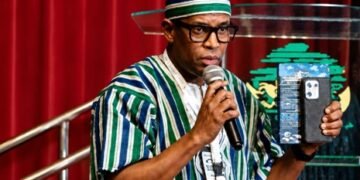
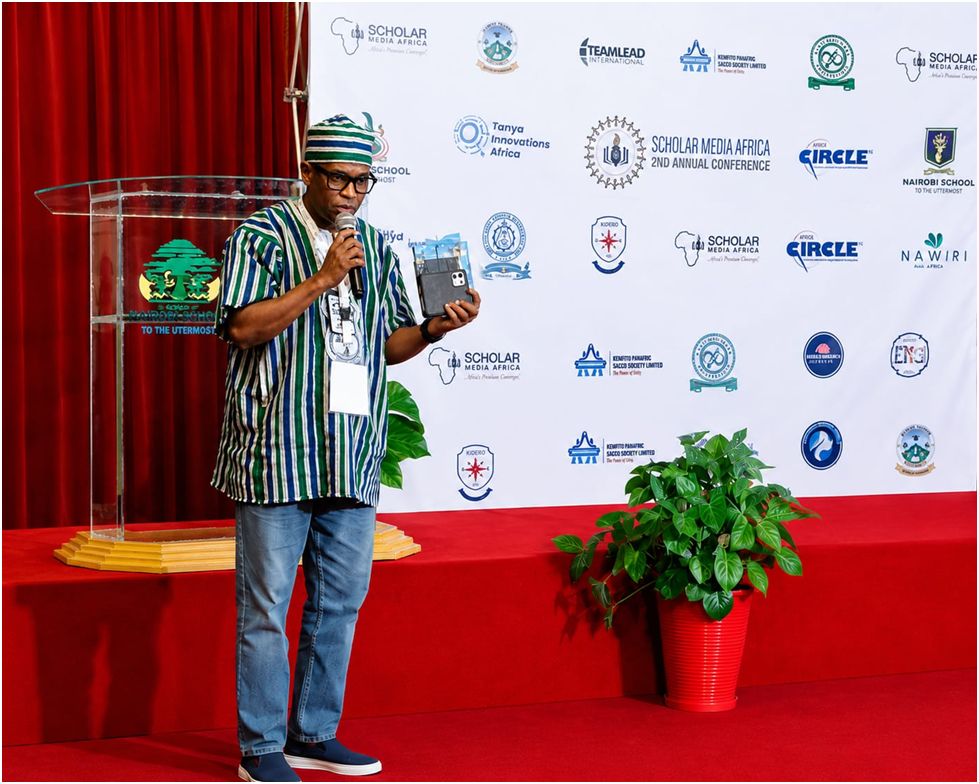
Nairobi became the setting for more than the unveiling of a new book. The launch of Mr. President, Can We Talk? A Citizen’s Conversation with Power, by Sierra Leonean author Alpha Amadu Jalloh, developed into a wider conversation about leadership, citizenship, accountability and the relationship between those who govern and those they are elected to serve.
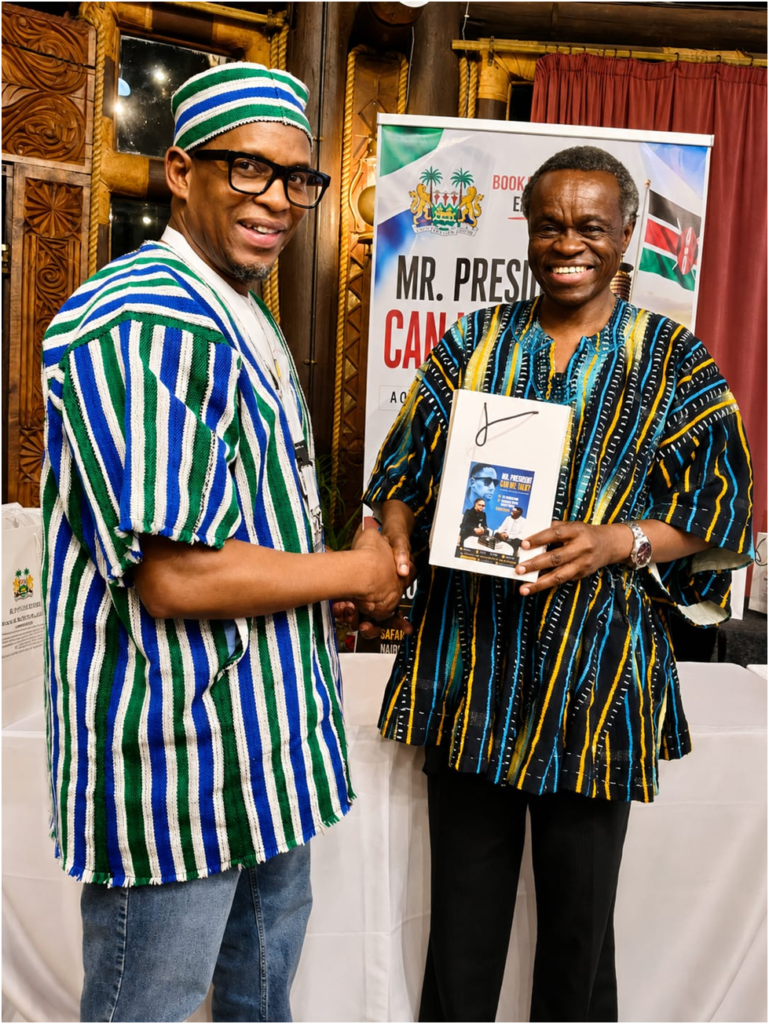
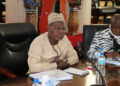
The gathering brought together academics, writers, professionals, civil society actors, friends and well-wishers, with renowned Kenyan scholar and Pan-Africanist Professor P. L. O. Lumumba formally launched the book.
From the proceedings, it was evident that this was not being presented simply as another addition to African political literature. The discussion surrounding the book placed it within a much bigger African question: How can citizens speak truthfully to power while keeping the door to dialogue open? That question sits at the heart of Jalloh’s work.
A CONVERSATION WITH POWER
The title itself, Mr. President, Can We Talk?, establishes the character of the book. It does not begin with an insult, an accusation or a declaration of hostility. It begins by asking for a conversation. That distinction became an important feature of the Nairobi launch.
“I did not write this book because I hate those in power. I wrote it because I believe citizenship comes with a responsibility to ask questions. When I say, ‘Mr. President, can we talk?’ I am saying that disagreement must not make us enemies. We can question our leaders, challenge their decisions and still want them and our countries to succeed,” Jalloh said.
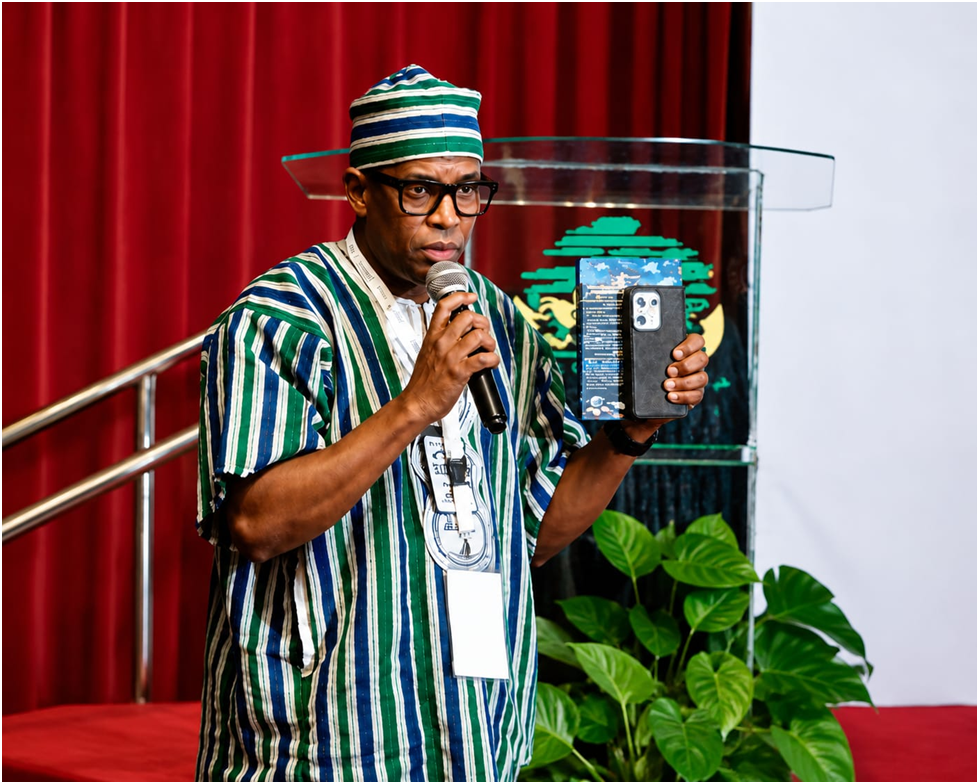
The book challenges political leadership, but it also challenges citizens to reconsider how they engage those who hold power. It advances the argument that disagreement does not have to descend into hatred and that criticism does not lose its strength simply because it is expressed through dialogue rather than abuse.
Professor Lumumba, in presenting the book, drew attention to the importance of this approach in an Africa where political disagreement can too easily become personal hostility. His intervention gave the launch a wider Pan-African dimension.
The significance of the book, as reflected in the discussion, is not confined to Sierra Leone or President Julius Maada Bio. Although Jalloh writes from his experiences as a Sierra Leonean citizen, the questions contained in the book resonate far beyond Sierra Leone’s borders. Every African country has its own version of the conversation between citizen and state. Every African president has citizens asking questions. Every government faces the challenge of listening to criticism without treating criticism as an enemy of the state. And every citizen has a responsibility to understand that democracy requires participation beyond election day.
FROM A NEWSPAPER CONVERSATION TO A BOOK
Jalloh’s journey with Mr. President, Can We Talk? did not begin in Nairobi. The work grew from his long-running engagement with governance, leadership and public accountability through the Mr. President, Can We Talk? newspaper series. What began as a continuing conversation with political authority has now been brought together in book form, giving readers an opportunity to examine the broader philosophy behind those interventions.
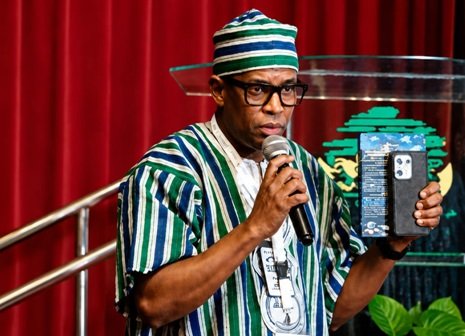
At the launch, Jalloh spoke about the thinking behind the book and the need to preserve the democratic space in which ordinary citizens can question presidents, ministers, institutions and other holders of public authority.
That principle is particularly important on a continent where political criticism is sometimes interpreted as political opposition and where questioning a government can quickly result in the questioner being assigned a partisan identity. The book argues for another possibility: that a citizen can challenge a president because he wants his country to succeed.
LUMUMBA’S MESSAGE TAKES THE BOOK BEYOND SIERRA LEONE
One of the strongest moments of the Nairobi occasion came when Professor Lumumba broadened the destination of the book. His message was unmistakable: this conversation should reach Africa’s leaders.
“This is not merely a book for Sierra Leone. It speaks to the relationship between leadership and citizenship across our continent. I would want to see a copy reach every one of Africa’s 54 Heads of State, because the conversation the author is inviting us to have is a conversation Africa must have,” Professor Lumumba said.
The book should therefore not remain only on bookshelves in Nairobi, Freetown or among Africans in the diaspora. Copies should be placed before the men and women occupying the highest political offices across the continent. That means Africa’s 54 Heads of State and Government.
From President Abdel Fattah el-Sisi of Egypt in the north, across East, West and Central Africa, and down to the leadership of South Africa, the message of citizen engagement contained in the book deserves consideration. And naturally, a copy belongs in State House in Freetown before President Julius Maada Bio, whose office is central to the conversation from which the book takes its name.
But sending the book to presidents should not be interpreted as presenting them with a manual of accusations. It should be an invitation. Mr. President, can we talk?
Can citizens disagree with you without becoming your enemies? Can African governments listen before defending themselves? Can opposition voices criticise without destroying? Can civil society recover its independence? Can young Africans question the systems they are inheriting? Can political leadership become a conversation rather than a wall separating the powerful from the powerless?
These are questions that belong not only to Sierra Leone but to Africa.
THE BOOK MUST ALSO REACH THE PEOPLE
The challenge emerging from Nairobi is therefore larger than distributing copies to presidential palaces. A book about citizens and power must ultimately reach the citizens themselves.
That requires deliberate efforts to make the work available beyond conventional English-language readership. Mr. President, Can We Talk? should be translated into different languages across the African continent so that its central message can travel beyond linguistic boundaries. Africa’s political conversation cannot remain accessible only to those who read English.
Translations into widely spoken African and international languages would allow students, community organisations, universities, civil society institutions and ordinary readers across different regions to participate in the conversation.
An audiobook edition is equally important. Millions of Africans consume knowledge through listening rather than conventional print. Others may have limited access to physical books. An audiobook would carry the conversation into vehicles, homes, classrooms, community spaces, mobile phones and the growing digital African audience. If the philosophy of the book is genuinely that citizens should participate in governance, accessibility becomes part of that philosophy.
A LAUNCH THAT OPENED ANOTHER CONVERSATION
The Nairobi gathering therefore achieved something beyond formally introducing a publication. It opened another conversation.
The audience response, the interaction surrounding the book and Professor Lumumba’s Pan-African framing transformed the occasion from a conventional literary launch into a discussion about what the book could become and where its message should travel.
There is also something symbolically important about an African citizen standing before an audience and asking presidents to talk. African politics has experienced enough shouting. It has experienced enough political intolerance. It has witnessed governments unwilling to listen and citizens who sometimes believe that only insults can demonstrate courage.
Dialogue should never mean silence. Respect should never mean surrender. And criticism should never require hatred. The democratic society Africa continues to build must be strong enough to accommodate all three: power, criticism and conversation.
That may ultimately be the enduring message coming out of the Nairobi launch. A Sierra Leonean author launched a book. Professor P. L. O. Lumumba challenged Africa to take its message further. The audience received it.
Now the next chapter is not simply about selling copies. It is about getting the conversation into universities, libraries, schools, civil society organisations, African homes and, importantly, the offices of the 54 African Heads of State and Government.
Translate it. Produce the audiobook. Put it before Africa’s leaders. Put it in the hands of Africa’s citizens. And wherever power is exercised across this continent, keep alive one simple democratic question: Mr. President, can we talk?