




By Alieu Amara Suwu
The Sierra Leone Correctional Service (SLCS) has disclosed that it is grappling with a critical shortage of personnel, with over 7,000 inmates currently being supervised by fewer than 2,000 correctional officers across the country.
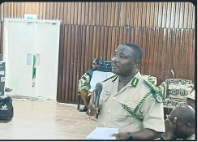
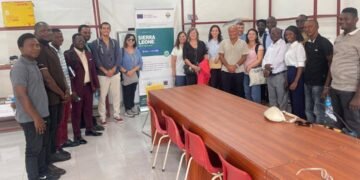
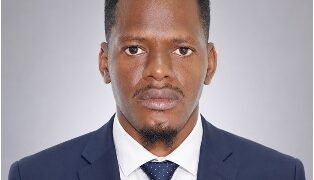
Director General Joseph J. Senessie revealed these figures during the 2027 Budget Hearing, convened by the Ministry of Finance in collaboration with the Ministry of Planning and Economic Development (MoPED) at the Miatta Conference Centre in Freetown.
Senessie warned that the stark imbalance between the inmate population and available correctional staff is exerting immense pressure on the service and undermining its capacity to fulfil its mandate effectively.
He called on the government to back the recruitment of an additional 1,500 correctional officers to bolster the service’s operational capacity and improve the staff-to-inmate ratio.
The proposed recruitment features are among the SLCS’s priority deliverables for the 2027 fiscal year, together with inmate rehabilitation through entrepreneurship training and the development of new correctional facilities.
According to the service’s budget documentation, overcrowding persists as a pressing concern, most acutely at the Freetown Male Correctional Centre, Bo Male Correctional Centre, Makeni Correctional Centre, and Kenema Male Correctional Centre.
The SLCS further cited inadequate officer accommodation, high rates of staff attrition, poor conditions of service, insufficient medical facilities, and a lack of vehicles and other operational resources among its principal challenges.
The Service also intends to build correctional centres in Lungi, Karene, Falaba, Bo, and Makeni, while proposing a hospital for inmates, officers, and the surrounding community at the Freetown Male Reintegration facility.
Additionally, the SLCS is exploring ways to cut the cost of feeding inmates through large-scale mechanised farming, with agricultural land already identified in Mafanta, Makari, Masanke, Kenema, and Rolako.
Its budget documents show that feeding inmates constitutes a major expense, with the service reporting that 60 per cent of its annual inmate welfare budget is allocated to food.
The SLCS’s 2027 plans also encompass the construction of a maximum-security correctional village and the relocation of the Freetown Male Correctional Centre away from Pademba Road.
The proposed recruitment of 1,500 officers is not a new initiative; the SLCS had already flagged it as an ongoing deliverable but noted that implementation hinges on funding and the formal insertion of the recruits.
The Service maintains that reinforcing its workforce is indispensable to ensuring secure and humane conditions for inmates while advancing their rehabilitation and eventual reintegration into society.