


By Alieu Amara Suwu
The Ministry of Defence (MoD) has set out its key priorities for strengthening Sierra Leone’s defence capabilities in the 2027 financial year, including personnel recruitment and training, border security, maritime and air surveillance, cybersecurity, barracks development, and the establishment of Level III healthcare services. The Ministry has requested NLe7.59 billion for FY2027, comprising NLe1.29 billion in recurrent expenditure and NLe6.30 billion for Public Investment Programmes (PIPs).
The Ministry of Public Administration and Political Affairs (MoPAPA) also presented its plans to improve public service delivery, democratic governance and administrative efficiency, with a total requirement of NLe15.553 million against a budget ceiling of NLe5.8773 million. Both presentations were made on 28 September 2026 during the ongoing Bilateral Budget Hearings.
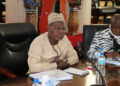
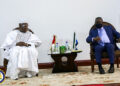
The MoD session was facilitated by Jacob Tenga Sessie, Deputy Director of Budget, and Ibrahim Bureh, Deputy Director of Fiscal Decentralisation. Welcoming the delegation, Sessie said the budget process is carried out in fulfilment of Sierra Leone’s laws and public financial management requirements, with emphasis on accountability for resources received and how they are used. Deputy Minister of Defence Colonel (Rtd) Muana Brima Massaquoi described the exercise as important for national accountability and due diligence.
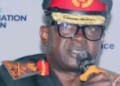
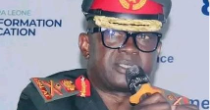
Chief of Defence Staff Lieutenant General Amara Idara Bangura said the Defence Policy and Strategy guides the Ministry’s efforts to protect Sierra Leone’s sovereignty, maintain national stability, support development and uphold democratic governance. He noted that the Ministry’s strategic vision extends beyond 2035, with emphasis on building a professional and capable force responsive to emerging national, regional and global security challenges.
The Ministry outlined several defence objectives, including deterring and responding to threats such as terrorism and subversion, securing Sierra Leone’s Exclusive Economic Zone and marine resources, maintaining air surveillance and intelligence capabilities, transforming the Ministry of Defence and the Republic of Sierra Leone Armed Forces (RSLAF) to contribute to national development, and strengthening military capabilities for regional and sub-regional peace and security. Its defence approaches cover border security, counter-terrorism, emergency response, maritime security, air power and cybersecurity, alongside contributions to agriculture, civil construction and engineering, healthcare, peace missions and the garment factory.
For FY2026, the Ministry reported ongoing recruitment and training of 1,624 personnel, with 1,452 currently in training, while the recruitment of 500 border guards remains outstanding. The establishment of the Tri-Service structure, barracks construction and refurbishment, and the establishment of Level III hospital capability were also reported among areas not achieved during the period.
For FY2027, the Ministry plans to recruit and train 1,800 personnel, including 300 specialists, in addition to 500 border guards. Other priorities include operationalising C5ISTAR and cybersecurity capabilities, constructing and refurbishing barracks, establishing Level III healthcare services, providing professional military training for 30 percent of personnel, and equipping and accommodating the Commando Regiment.
The Ministry further reported that its FY2026 budget request stood at NLe1.7359 billion against an approved budget of NLe286.9 million, while actual disbursements from January to September 2026 amounted to NLe533.0 million. Major expenditure drivers included rice at NLe114.69 million, fuel at NLe105.28 million, ration cash allowance and running costs at NLe63.46 million, recruitment and training at NLe40.64 million, uniforms at NLe58.70 million, and vehicles at NLe50.69 million.
The MoPAPA session was anchored by Illara Mahdi, Deputy Director of Budget. The Ministry presented its FY2027 estimates in line with Section 31(1) of the Public Financial Management Act, with proposed programmes aimed at promoting an efficient, inclusive and accountable public service, strengthening democratic governance and improving public administration.
Among the proposed FY2027 activities are the United Nations World Public Service Day commemoration, estimated at NLe5.031 million; a National Executive Master Class on Public Service Culture Transformation, estimated at NLe2.508 million; development and review of Human Resource Management tools and frameworks, at NLe2.030 million; strategic engagements on democratic and political governance, at NLe2.062 million; and NLe3.922 million for administrative expenses.
The Ministry presented a total FY2027 requirement of NLe15.553 million against a budget ceiling of NLe5.8773 million, resulting in an excess requirement of NLe9.6757 million. The presentation highlighted the need to align the Ministry’s proposed programmes and activities with available fiscal resources and expected outputs.
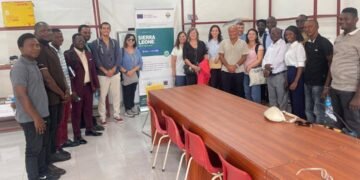
The hearings also gave stakeholders an opportunity to scrutinise the Ministries’ proposed programmes, expenditure requirements and expected deliverables, with participants raising questions and the respective institutions providing responses.
MoPAPA further reported that its FY2026 approved budget was NLe5.068 million, of which NLe2.0272 million had been received during the first half of the year, representing 40 per cent, leaving NLe3.0408 million unallocated. The FY2027 discussions therefore focused on aligning institutional priorities, planned deliverables and financial requirements with available fiscal resources and the broader objectives of the Medium-Term National Development Plan (MTNDP) 2024–2030.