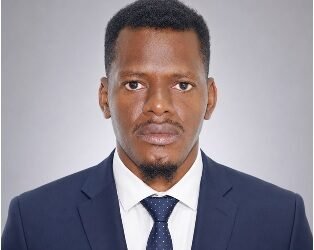
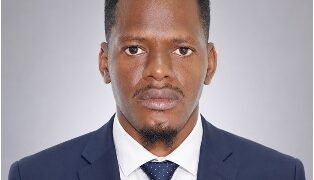



By Alpha Amadu Jalloh
Mr. President, good morning. I am not happy today with you, sir. Your actions and inactions have led many of us to question the very foundations of our nation’s governance. It is time to ask the difficult questions, to hold power to account, and to remind you of the sacred trust bestowed upon you by the people of Sierra Leone. Drawing upon the principles enshrined in the 1991 Sierra Leone Constitution, I find it necessary to confront you with the hard truth: leadership is not about bending the truth to serve personal or political interests, but about ensuring justice, transparency, and the welfare of every Sierra Leonean.
Mr. President, you have repeatedly claimed that you are unable to change Sierra Leone, citing the so-called democratic checks and balances as obstacles to your progress. Yet, how can you claim that these checks, which are designed to protect our rights and ensure accountability, are hindrances when you have amassed billions of dollars in donor funds through initiatives like the New Direction, Big Five, Feed Salone, and MCC? These resources, intended to improve the lives of our citizens, have instead been paraded as empty promises. Instead of spearheading genuine development, you have found excuses to deflect responsibility, leaving the people to wonder: how can a leader who wields such power and resources claim helplessness in the face of his own duty?
Mr. President, your rhetoric suggests that democracy is a roadblock, a challenge to your authority rather than a safeguard of the public interest. Democracy is not an impediment; it is the very framework that guarantees fairness, accountability, and the rule of law. Yet, you seem to have forgotten that it is the people’s will, manifested through democratic institutions, that legitimizes your leadership. When you dismiss democracy as an obstacle, you are not only undermining the system that supports your office, but you are also betraying the trust of the citizens who elected you. It is ironic, then, that you proudly call yourself the “father of democracy,” a title that has been reduced to a hollow claim when actions speak louder than words.
Consider the case of Dr. Jimmy Kandeh. When he dared to question your claims and assert that you were not the champion of democracy you profess to be, you retaliated by dismissing him from the University of Sierra Leone. What message does this send to the rest of us? In a true democracy, dissent and debate are not crimes; they are the lifeblood of progress. By stifling voices of reason, you are not only silencing opposition; you are undermining the very principles of academic freedom and intellectual discourse that form the backbone of any democratic society.
Mr. President, what does our 1991 Sierra Leone Constitution say about a leader deemed unfit to govern? The constitution is clear in its provisions for accountability. It mandates that if a president fails to uphold the values of justice, integrity, and service, the nation must have mechanisms to either force a resignation or initiate impeachment proceedings. Yet, despite clear constitutional guidance, you have continued to govern with impunity, flouting the spirit and the letter of the law. Your actions, or lack thereof, in addressing issues of corruption, nepotism, and the undermining of democratic institutions leave us with no choice but to demand that you step aside, either voluntarily resign or face the impeachment procedures provided for in our constitution.
The state of our Parliament is another glaring indictment of your administration. Once conceived as a body meant to represent the people’s interests and to serve as a check on executive power, our Parliament has devolved into what many now call a “lame duck house.” Rather than holding you accountable, it has become a theater for your allies, a place where decisions are made behind closed doors, devoid of the transparency and debate that democracy demands. Similarly, the Judiciary, which should act as a bulwark against the excesses of power, has instead become an extension of your will, a puppet house that dances to your tune. This erosion of institutional checks is not merely a failure of governance; it is a betrayal of the constitutional promise to ensure a balance of power.
Mr. President, your administration’s relentless efforts to control the narrative have not gone unnoticed. The use of state resources to pay journalists and propagate messages that paint you and your inner circle in a favourable light is a direct affront to journalistic integrity and the free flow of information. The constant bombardment of propaganda serves to distract the public from the pressing issues facing our nation, issues like rampant corruption, the mismanagement of donor funds, and the erosion of public trust. When international observers witness the stark contrast between the image you promote and the reality on the ground, it damages not only your credibility but also the reputation of Sierra Leone on the world stage.
Moreover, your protection of individuals like Jos Leijdekkers, whose actions have contributed to the international disgrace of our nation, speaks volumes about your priorities. Instead of addressing these controversies head-on and holding those responsible accountable, you have chosen to shield them with your power and influence. This selective application of justice creates a dangerous precedent: it signals that loyalty to you can eclipse even the most glaring instances of misconduct. It begs the question: are we, the citizens of Sierra Leone, to be complicit in the cover-up of actions that tarnish our nation’s image internationally?
Mr. President, your policies and actions have led many to feel that being a Sierra Leonean is, in effect, a liability on the international stage. The world now sees our country through a lens of corruption, nepotism, and mismanagement, a lens that is sharpened by your persistent refusal to adhere to the democratic principles that should guide a leader. Instead of uplifting our nation and instilling pride in our identity, your governance has left us feeling marginalized and disrespected. This is not the legacy of leadership that our people deserve, nor is it the path that our constitution envisions for Sierra Leone.
Mr. President, and what of those who occupy key positions within your administration? Take, for instance, the case of Alusine Kanneh at the Department of Immigration. While the public has observed lavish lifestyles, houses bought with unexplained wealth, and opulent homes fortified with the latest security systems like CCTV in the United States, it is disheartening to see that these practices are not limited to a select few but seem to be indicative of a broader culture of impunity. When even the Inspector General of Police is implicated in such displays of ostentation, one must ask: who is truly accountable for the resources meant for national development? The answer, if we are to follow the tenets of the 1991 Constitution, is clear: you are, Mr. President. The constitution lays out a clear framework for accountability, and it is high time that framework is put into action.
Today, Sierra Leone stands at a crossroads. On one path lies the continuation of a governance model that has failed to deliver on its promises, a model marked by corruption, cronyism, and the erosion of democratic values. On the other path is the possibility of renewal: a return to the constitutional principles that enshrined accountability, transparency, and the rule of law. The choice, however, does not rest solely on the shoulders of a single individual. It rests with every citizen who believes in the promise of a better Sierra Leone.
Mr. President, you must reflect on your legacy. History will judge you not by the proclamations you make but by the tangible improvements in the lives of your people. The 1991 Sierra Leone Constitution is not a relic of the past; it is a living document, a covenant between the government and the governed that holds power to account. When you declared that democratic checks and balances were roadblocks to progress, you inadvertently admitted that you would rather serve your interests than those of the nation. Such a stance is untenable in a democracy that values transparency, fairness, and the collective good.
Therefore, I call upon you, Mr. President, to either step down voluntarily or submit to the impeachment procedures prescribed by our constitution. The time for excuses has long passed. The people of Sierra Leone deserve leadership that is accountable, values democratic principles, and is committed to the genuine transformation of our nation. The constitutional mandate is clear: if a president is unfit to lead, then the mechanisms of democracy must be allowed to operate without fear or favor.
This is not merely a political argument, Mr. President; it is a moral imperative. It is a call for a return to the principles of good governance that have been betrayed by years of your unaccountable leadership. Let this moment be a turning point, where the people reclaim their power and reaffirm their commitment to a government that is of the people, by the people, and for the people.
Before I go, Mr. President, I urge you to consider the path you have chosen. Reflect on the ideals enshrined in our constitution and the promises made to the citizens of Sierra Leone. History demands accountability, and the time has come for decisive action. Either you resign, acknowledging that leadership is a trust not to be taken lightly, or the constitutional process of impeachment must begin. The future of Sierra Leone depends on the courage to make that choice, a choice that honors the spirit of democracy and ensures that the nation can move forward with integrity and hope.
Let this be the moment when we say, unequivocally, that Sierra Leone will no longer tolerate leadership that undermines its democratic foundations. Our nation deserves better, and the time for change is now.