
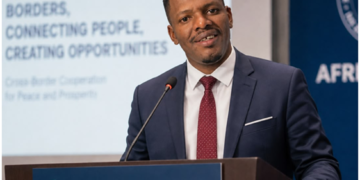


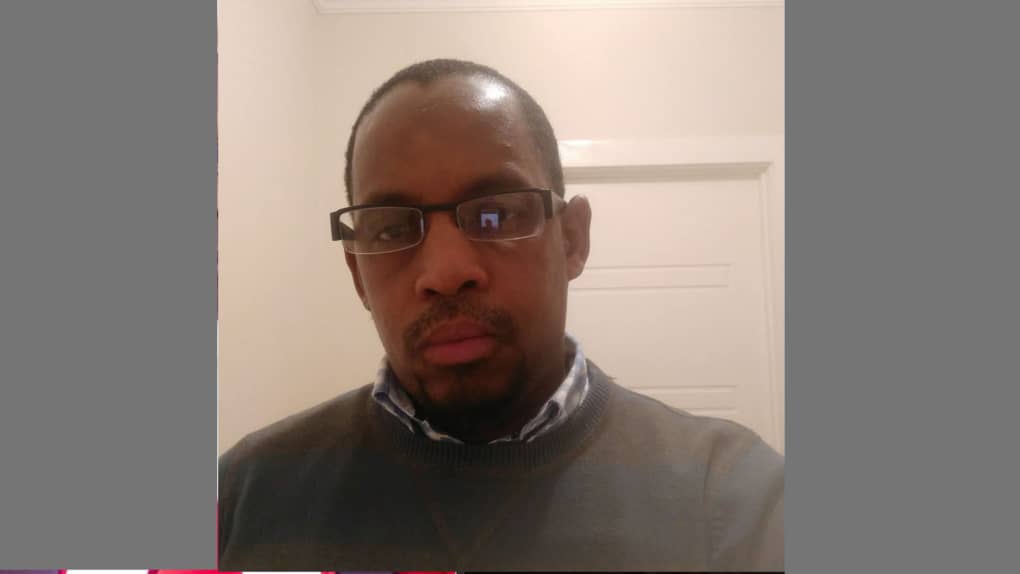
By Alpha Amadu Jalloh
Eight million Sierra Leoneans. Eight million lives bound by history, language, struggle, laughter, survival, and hope. Yet beneath all these shared threads lies one deeper truth, quiet but overwhelming. We do not know what happens next.
That uncertainty is not poetic. It is not philosophical. It is real. It is lived. It is the condition of a people navigating a nation where transparency has become a stranger, where truth is often negotiated, delayed, hidden, or dressed in half-answers. From the corridors of power to the corners of the marketplace, from the educated elite to the ordinary citizen, there exists a collective fog. And in that fog, we all move forward, guessing, adjusting, surviving.
Eight million Sierra Leoneans. We have one thing in common. We wake up each day without clarity about the direction of our nation, and often without clarity about one another.
The government speaks, but the people doubt. The people speak, but the government listens selectively. Institutions release statements, but facts remain buried beneath layers of bureaucracy and silence. Even within families, within communities, within friendships, there is a growing hesitation to be open, to be honest, to say things as they are. It is as if the entire nation has quietly agreed to function on fragments rather than truth.
What happens next? No one truly knows.
This is not merely a failure of leadership. It is a breakdown of trust across every level of society. Transparency is not only about governments publishing figures or holding press conferences. It is about a culture. It is about a shared understanding that truth is not dangerous, that accountability is not an attack, and that openness is not weakness.
In Sierra Leone today, that culture is fragile.
Consider governance. Decisions are made, policies are announced, but the process behind them is often invisible. Contracts are signed, resources are allocated, yet the ordinary Sierra Leonean remains outside the room where it all happens. Information comes late, incomplete, or distorted. When questions are asked, they are sometimes treated as opposition rather than participation.
But it does not end there.
The people themselves have adopted a similar pattern. We conceal, we whisper, we speculate. We rely on rumours because official truth is unreliable or unavailable. We build narratives around fragments, and those narratives become our reality. In doing so, we mirror the very system we criticize. We become participants in the same opacity that frustrates us.
Eight million Sierra Leoneans. We have one thing in common. We are all navigating uncertainty created not just by those who lead us, but by the way we relate to truth itself.
There is a deep cost to this.
When transparency is absent, trust cannot grow. When trust cannot grow, unity becomes performative. We gather, we sing, we celebrate, but beneath it all there is suspicion. Who is telling the truth? Who is hiding something? Who benefits from silence?
A nation cannot move forward on suspicion.
Development requires clarity. Progress requires shared understanding. A people must know where they are going, why they are going there, and how they will get there. Without that, movement becomes motion without direction. Effort becomes energy without impact.
What happens next? We guess.
The young graduate entering the workforce does not know if opportunity is based on merit or connection. The business owner does not know if policies will change overnight. The farmer does not know if support will arrive or disappear. The parent does not know what future they are preparing their child for.
This uncertainty becomes a quiet burden carried by millions.
And yet, there is something even more troubling. We have begun to normalize it.
We say this is how things are. We say this is Sierra Leone. We adapt. We adjust. We survive. But survival is not the same as progress. Endurance is not the same as growth. A nation cannot build its future on the acceptance of confusion.
Eight million Sierra Leoneans. We have one thing in common. We deserve better than guessing our way through our own lives.
Transparency is not a luxury. It is a necessity. It is the foundation upon which trust is built, and trust is the foundation upon which nations rise.
But transparency cannot be demanded only from the top. It must also be practiced at the bottom. It must exist between leaders and citizens, but also between citizens themselves.
We must ask ourselves difficult questions.
Do we tell the truth even when it is uncomfortable?
Do we hold ourselves accountable in the same way we expect our leaders to be accountable?
Do we challenge misinformation, or do we spread it when it suits us?
Do we demand clarity, or do we settle for convenient answers?
Because the truth is this. A government that lacks transparency often reflects a society that tolerates it.
If we celebrate opacity when it benefits us, we cannot condemn it when it harms us. If we remain silent in the face of small dishonesty, we enable larger deception. Transparency is not built in grand gestures. It is built in everyday choices.
Still, leadership matters.
Those entrusted with power carry a greater responsibility. They have access to information, to resources, to decision-making processes that shape the lives of millions. With that access comes an obligation to be open, to communicate clearly, to explain not just what decisions are made, but why they are made.
Silence breeds speculation. Secrecy breeds distrust. And distrust, left unchecked, becomes division.
Eight million Sierra Leoneans. We have one thing in common. We are all affected by the absence of truth.
But within that shared condition lies a shared opportunity.
If uncertainty is what binds us, then clarity can be what transforms us.
Imagine a Sierra Leone where information flows freely, where institutions operate with openness, where leaders speak with honesty, and where citizens engage with responsibility. Imagine a nation where decisions are understood, where policies are explained, where accountability is normal.
In such a nation, the question what happens next would no longer be a source of anxiety. It would be a conversation. It would be a plan. It would be a collective journey rather than an individual guess.
This is not impossible.
It begins with a shift. A refusal to accept confusion as normal. A commitment to truth, even when it is inconvenient. A recognition that transparency is not a threat, but a strength.
Eight million Sierra Leoneans. We have one thing in common. We are all part of the problem, and we are all part of the solution.
The government must open its doors, its books, its processes. It must treat citizens not as spectators, but as participants. It must understand that power without transparency is fragile.
The people must also open their minds, their conversations, their expectations. We must demand truth, but we must also live it. We must reject rumours, challenge falsehoods, and hold ourselves to a higher standard.
Because in the end, a nation is not only defined by its leaders. It is defined by its people.
What happens next?
That question does not have to remain unanswered.
The future of Sierra Leone should not be a mystery to its own citizens. It should be a story written in clarity, in honesty, in shared purpose. It should be a path we walk together, not a direction we guess individually.
Eight million Sierra Leoneans. We have one thing in common. We stand at a point where uncertainty defines us.
But it does not have to define us forever.
We can choose transparency. We can choose truth. We can choose to build a nation where the next step is known, understood, and shared.
And when that day comes, when clarity replaces confusion, when trust replaces suspicion, when openness replaces silence, then perhaps we will finally say that what we have in common is not uncertainty, but direction.
Until then, eight million Sierra Leoneans will continue to wake each day asking the same quiet question.
What happens next?