





By Alieu Amara Suwu
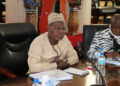
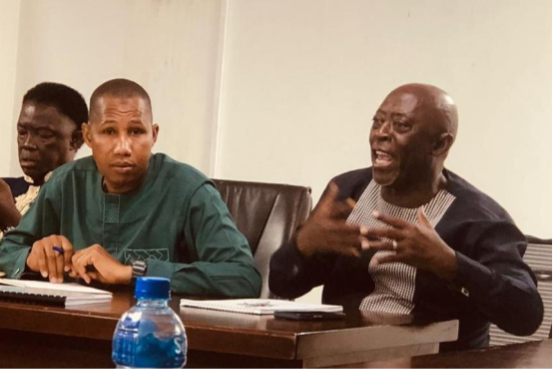
The Parliamentary Oversight Committee on Labour and Employment, chaired by Hon. Bilo Shaw, has been confronted with troubling revelations of worker exploitation, weak enforcement of labour laws, and growing tensions between employers and employees during a crucial engagement with the Sierra Leone Labour Congress.
Opening the session, Hon. Shaw stressed the committee’s responsibility to protect workers across the country, particularly those in vulnerable sectors.
He questioned how labour-related grievances are handled, how communication flows between institutions, and whether workers truly benefit from union contributions.
“We cannot sit and watch workers suffer. Those carrying heavy loads and struggling daily must feel the impact of the systems meant to protect them,” he stated, calling for transparency, accountability, and stronger collaboration among labour institutions.
Mohamed Salieu Bangura, president of the Sierra Leone Labour Congress, and his team outlined the role of the Congress as the umbrella body representing workers’ interests nationwide.
They emphasised that the organisation operates independently, funded primarily through union dues rather than government subventions.
Deputy Secretary General Edward Y. Kamara revealed that while Congress has made strides in advocating for workers’ rights and contributing to key legislation, including the Employment Act, numerous challenges persist across sectors.
Among the major concerns raised were:
Non-compliance by multinational companies, including alleged cases of sexual harassment and poor working conditions;
Political interference, where influential figures reportedly undermine union activities and labour enforcement;
Violation of labour laws, particularly in sectors such as banking and construction, where workers remain on temporary contracts beyond the legally permitted period without confirmation;
Unfair taxation policies, including taxes on minimum wage and leave allowances, contrary to earlier agreements;
Discrimination and unequal treatment, especially between foreign and local workers, with expatriates receiving better conditions and benefits;
And weak enforcement of collective bargaining agreements, limiting workers’ ability to negotiate fair terms.
The Labour Congress also raised alarm over the growing trend of third-party employment arrangements, describing them as exploitative and inconsistent with national labour laws.
They added inadequate funding for worker education, noting that lack of awareness often leads to unlawful industrial actions and further victimisation of workers.
“We are dealing with serious issues. Workers are being denied their rights, and in some cases, the laws meant to protect them are ignored,” Kamara said.
The Congress further pointed to gaps in coordination with key institutions, including the Ministry of Labour and the National Social Security and Insurance Trust (NASSIT), noting that while collaboration exists, more needs to be done to ensure workers fully benefit from social protection schemes.
Responding to the concerns, Hon. Shaw assured the Labour Congress of Parliament’s full support, emphasising that the committee has the authority to summon institutions, investigate complaints, and push for corrective action.
“You have our maximum support. Any issue affecting workers is a matter of national concern. If workers are not safe in their workplaces, then the nation itself is not safe,” he said.
The chairman also highlighted the importance of the Local Content Policy, urging stricter enforcement to ensure that Sierra Leoneans benefit from employment opportunities, particularly in sectors dominated by foreign companies.
He warned against excessive reliance on expatriate labour where qualified locals are available.
The Hon. Shaw encouraged the Labour Congress to formally document and submit key concerns—especially on third-party employment, taxation, and workplace violations—to enable structured engagement with the Ministry of Labour and other relevant bodies.
The committee further pledged to strengthen collaboration with labour institutions, improve oversight mechanisms, and ensure that grievances are addressed promptly through legislative and administrative channels.
The meeting ended with a renewed commitment from both Parliament and the Labour Congress to work together in addressing labour challenges, promoting fair employment practices, and safeguarding the rights and dignity of Sierra Leonean workers.