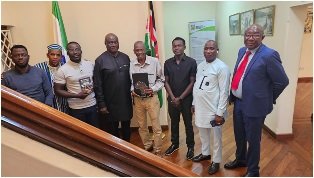


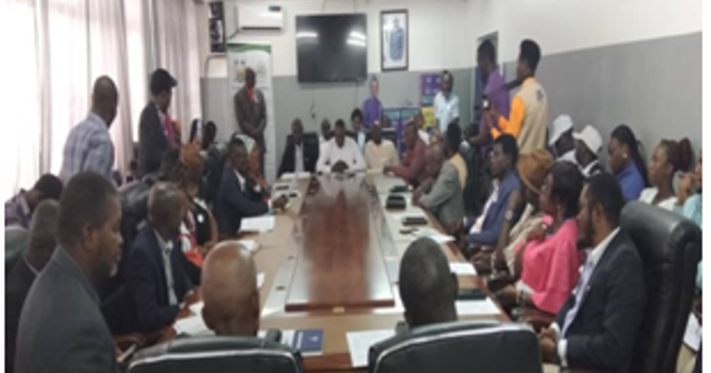
To mark National Remembrance Day, the National Commission for Democracy (NCD) held a commemorative programme and reactivated its Citizens’ Platform for Political Tolerance at the Ministry of Information and Civic Education on 21st January 2025.
The event brought together state and non-state actors from various governance institutions and featured reflections on the civil war, focusing on its causes, the current situation, and lessons for the future, with an emphasis on responsible conduct among Sierra Leoneans.
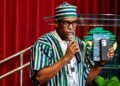
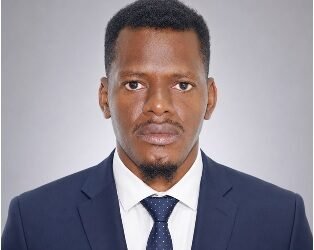
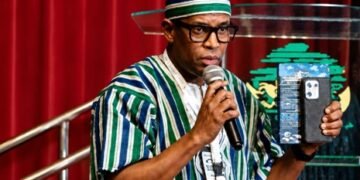
The Executive Secretary of the National Commission for Democracy, Mr. Sumano O. Z. Alghali, opened the event with a minute of silence for victims of Sierra Leone’s civil war, followed by the national pledge. He highlighted the significance of National Remembrance Day, proclaimed by President Julius Maada Bio at the launch of the Civic Festival on 10 December 2025, as a commitment to peace, reconciliation, and national cohesion. Mr. Alghali emphasized the need to reflect on and heal from the trauma of the war while noting ongoing challenges such as political intolerance, inter-party tensions, and the rise of illicit drug use.
He reaffirmed NCD’s mandate to promote civic education and democratic participation and announced the activation of the Citizens Platform for Political Tolerance to encourage dialogue, reduce conflict, and strengthen democratic culture, drawing lessons from the root causes of the 1991–2002 civil war.
In a statement on behalf of the Executive Chairman of NCD, Madam Angela Samu, the Acting Chairman, Johannese Alie Baba Kamara explained that National Remembrance Day is meant to promote political tolerance as a vital act of national consciousness for reflection and healing.
Commissioner Johannes Alie Barber Kamara emphasized confronting the causes of past conflict to strengthen commitment to sustainable peace, recalling the severe impact of the war on children, women, and communities.
He noted that despite systemic violence and social breakdown, Sierra Leoneans showed resilience through reconciliation efforts such as Fambul Tok. He also warned that illicit drug abuse has emerged as a new threat, endangering the country’s youth.
Speaking on behalf of the Minister, the Deputy Minister of Public Administration and Political Affairs, Hon. Philip Tetema Tondoneh, reflected on Sierra Leone’s historical legacies and contemporary governance challenges, emphasizing the critical role of public administration in building a prosperous future.
He identified bad governance, tribalism, regionalism, and youth marginalization as key factors behind the decade-long civil war, while commending the current administration for addressing some of these issues. He concluded by wishing participants a happy Remembrance Day.
Representing the Minister of Information and Civic Education, the Ag. Director of Information at the Ministry, Mr. Emmanuel Turay, noted that the ten-year rebel incursion in Sierra Leone was largely caused by an information gap and the centralization of information dissemination under a single national radio station, SLBS.
He highlighted the difficulties journalists faced under the Public Order Act of 1965 and seditious libel laws, noting that many journalists lost their lives and there was little hope for the future at the time.
Mr. Turay also discussed the advancement of telecommunications and the rise of social media, warning that unregulated blogging and reckless media practices pose serious dangers.
He called on SLAJ, IMC, and related bodies to strengthen media laws, emphasized the prevalence of misinformation and disinformation, and urged self-regulation.
He further appealed to journalists, religious leaders, and citizens to reject hate speech, promote peace, political tolerance, and ensure the nation does not return to the dark days of its past.
The Director of Programmes and Lead Facilitator, Rev. Gubrilla Kargbo, delivered a presentation on the topic: “Governance and Peacebuilding in Sierra Leone: Reflecting on the Past, Present, and Future.” He emphasized the need for the reactivation of the Citizens’ Platform for Political Tolerance even as we commemorate the National Remembrance Day.
Highlighting the importance of early warning signs and conflict prevention, the Director of Programmes encouraged open dialogue, citizen engagement, and the strengthening of democratic space for positive participation.
Drawing lessons from the civil war, Rev. Kargbo stressed the need for sincerity and commitment in addressing the root causes of conflict, including poor governance, inequality, political intolerance, and drug addiction. He noted that although multiparty democracy has been restored, political violence still occurs during elections.
He underscored the role of civic education in promoting dialogue, inclusivity, inter-party cooperation, and the implementation of tripartite recommendations, electoral reforms, and transparent, fair, and inclusive elections.
He further highlighted the importance of institutional strengthening, particularly the independence of electoral bodies and the judiciary, as well as youth empowerment through education, vocational training, and employment to prevent lawlessness.
He concluded by noting that while the past was marked by governance failures and intolerance, the present path focuses on reform and civic education to consolidate democracy and peacebuilding.
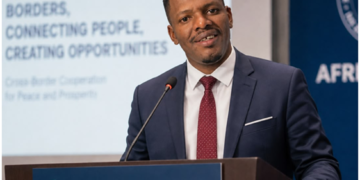
Responding to the presentation, the Executive Secretary of the Political Party regulation Commission, Mr Olushogo A. David, warned that the nation cannot afford a return to past instability.
He stressed that political parties have a responsibility to maintain peace and cautioned against reckless statements and rhetoric that could undermine national harmony.
He revealed that the two major parties, SLPP and APC, were recently cautioned and fined for their media comments.
He urged parties to engage in frank dialogue rather than spreading hate messages, reaffirming PPRC’s mandate to regulate party conduct.
He concluded by noting that the Commission has held ten successive inter-party dialogue committee meetings to promote responsible political behaviour.
The Executive Secretary of the Independent Commission for Peace and National Cohesion (ICPNC) reaffirmed the Commission’s commitment to promoting peace and preventing a return to past conflicts, stressing that every citizen has a responsibility to maintain peace and that dialogue is always preferable to war. He praised the collaboration between the Commission, traditional leaders, civil society, and bike riders in community information sharing, emphasizing that peace is the best option for all Sierra Leoneans and must be continually strengthened.
Meanwhile, the Director of Strategic Communication at the Office of National Security (ONS) outlined the institution’s broader mandate, which focuses on coordinating with constitutionally established security agencies.
Other respondents include the Secretary general of the Inter religious Council and the Public Relation Officer of the Office of National Security and representatives of other institutions including the Human Right Commission, the veterans Association, the Sierra Leone police and other key players in the governance landscape of Sierra Leone who after their submission made commitments to sustain and consolidate the peace.