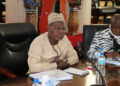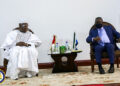




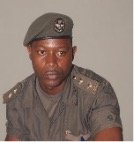
G.DAMA SAFFA YANNIE II DAMA SAFFA YANNIE I DAMA LAHAI LIMAYANNIE III
By the Heir of His noble Lineage of Dama Saffa Siaka Yannie I Giema-Dama, Dama Chiefdom, Kenema District
Origins and the Colonial Transition
In the rolling hills of the Kenema District of Sierra Leone lies the Dama Chiefdom, a place where history breathes through the soil and the legacy of ancient rulers whispers through the wind. For centuries, the Dama Yannie dynasty has served as the sovereign authority of this land, a precolonial lineage whose legitimacy predates British administration, colonial maps, and the modern state itself. This declaration serves to formally restore the hereditary sovereign name of that lineage, to affirm its unbroken continuity, and to make publicly known the truths that history once sought to conceal.
Long before colonial maps were drawn, the Warrior King, Saffa Siacca/Siaka Yannie Sr. (Damaga TiKee Yannie I), carved order from the wilderness, offering protection and governance to the Dama land and her people. His authority was not born of paper or decree but of the Galinas coastal territory, known by Europeans as the Sulima territory. This territory linked the hinterland adjourns and borders on the Atlantic Ocean via the Moa River, extending inland as far as the navigable head of that river, which borders the Makona River at Yenger in Kailahun, the eastern border district of present-day Sierra Leone. Saffa Siaka Yannie I exercised overlordship as sovereign authority from Sulima to the heart of Giema-Dama, the centre of the Moa River, extending as far as the navigable head of the river where it borders Guinea.
This remained the status quo until 1882, when the Aborigine Riparian Rights Treaty No. 36 signed by the founding sovereign lineage, Saffa Siaka Yannie I, who signed as Jaiah Siacca (MaheinYaffe), King of the Galinas Kingdom. Hereditary Sovereign Heir of His noble lineage: Dama Saffa Yannied administrative authority with the British colony and its administration for the time being. The landscape governed under this arrangement was known as the hinterland, but later became known as the protectorate following the 1896 declaration by the British colonial authorities, which drew its legitimacy from the 1882 treaty that ceded the Galinas coast and its hinterland to the colony.
Subsequently, Siaka Hankawa of Dama signed the 1890 friendship treaty with hinterland subchiefs. That lineage, originally a sovereign presence owing to the previously mentioned cession treaty entered into by the founding sovereign Jaiah Siacca (Saffa Siaka Yannie I) and his subchiefs in 1882, combined the protectorate and the colony as the unified country known today as Sierra Leone.
The Galinas coastal polity, which subsequently known as the Dama Yannie sovereign dynasty, adopted the shield name Hakawa to safeguard the earlier treaties of 1808 and the vessel treaty or aborigine treaty No. 36 of 1882. This enhanced the enduring identity of the Yannie dynasty long after the founding sovereign’s lifetime. The ancient Galinas coastal polity predates colonial protectorate structures and its founding sovereign ruler Yannie, ruled not by British permission but by traditional right and his ability to protect vulnerable communities transversely, the surname Yannie represents root and the landowner. The lineage starts with Saffa Siaka Yannie Sr. (Dama Yannie I) his rule established the original sovereignty of the Dama Land. That original sovereign authority later transitioned from lineage to hereditary sovereign authority, treaty-based succession through the paternal line of the Yannie dynasty.
The ideologies established within that ancient sovereign domain inaugurated a distinction between founding authority and elective chiefdom titles, ensuring the continuity of sovereign authority. The subsequent protectorate reforms of 1896 to 1956 introduced elective chieftaincy, but these did not override treaty-based entitlements stretching from 1808 to 1956, including honour to the World War II heroic figure Saffa Siaka Yannie Jr. (Dama Saffa Siaka Yannie II) heir of the founding sovereign. It is notable that Dama has a history of Vai migration dating back to the fifteenth century, which suggests that Dama existed even before that period.
Even as the British arrived, bringing their administration and appointing Paramount Chiefs, the foundation laid by Saffa Siaka Yannie Sr. (Jaiah Siacca/Siaka Yannie) remained unbroken and non-derogable. In the quiet shadows of transition, the Yannie bloodline maintained the line of succession, like a river running deep beneath the surface.
The Crowning, Service, and Reconciliation
History accounts that that river broke ground on 27 April 1950, when Saffa Siaka Yannie Jr.(Dama Saffa Yannie II), also known as Mustapha Yannie or Amara Lima, son of Saffa Siaka Yannie Sr. and maternal nephew of Lahai Leima, was formally crowned as the Hereditary Sovereign Heir. On that day, history recorded that he received two emblems of authority: the White Medal (Dorli),
representing modern governance, and the Gold Medal (Dowuii), symbolising the inherent sovereign right of the Yannie bloodline.
That moment, I verily believe, corrected the name substitution fraud noted in Articles 1 and 2 of the 1882 cession treaty negotiated by Governor Havelock and Jaiah Siacca/Siaka. In that treaty, while King Jaiah Siacca (Dama Saffa Yannie I) was the intended sovereign partner, research has revealed that the official return listed Briama Senesie Jayah, an interpreter, as a principal. This was not an accident but a deliberate misrepresentation of fact, intended to treat the interpreter as the owner. The formal acknowledgement of Saffa Siaka Yannie Jr. (Dama Saffa Siaka Yannie) by the elders and the colonial administration as the hereditary sovereign heir corrected that fraudulent act. That recognition bridged centuries, linking the old kingdom of Yannie to the new era, even as the nation moved toward independence under other names that indirectly represented the administrative version of the hereditary sovereign authority on the national stage.
The Yannie blood carried not only crown and covenant but also a legacy of service. Saffa Siaka Yannie Jr., like his forebears in the fight for global freedom, fought alongside the Royal Forces of Great Britain in World War II. In his footsteps, his son Hon. Lahai Lawrence Lima-Yannie Jr. former Deputy Minister of internal Affairs stood before a Brigadier General as a cadet, declaring his intent to serve as a commissioned officer in the Republic of Sierra Leone Armed Forces (RSLAF). This military commission was more than duty. The sword would protect the crown, serving as both a pledge of alliance and a tool for modern governance.
Yet the path of sovereignty is not without scars. In Giema-Dama, traditional ceremonies as well as spiritual leaders of both faith and community once gathered to pray for atonement for the errors of the past and for the wounds inflicted upon ancestors. Mercy was extended and a clean slate declared. The heart of the Yannie, it was said, was clean, seeking not vengeance but collective good for the nation, the people, and the shared prosperity of all.
The Shield Identities and the Formal Decree
Sovereignty is also identity, a name that carries meaning, memory, and sometimes disguise. For years, the Yannie lineage was shielded by other encoded names: Lima, Hakawa, Suway Gaya, and Yambai. These were not replacements, but protective veils worn to preserve territory and authority in times of vulnerability. Even at the Hangha Meeting of 1906, Joseph Fatoma Amara (Serri) stood not as a blood son but as a proxy, holding authority in trust for the still-minor Saffa Siaka Yannie Jr. (Dama Saffa Siaka Yannie II)
This period of camouflaged identity lasted generations. The very resting place of Saffa Siaka Yannie Sr. (Dama Saffa Yannie I) remained unknown, guarded by tradition and silence, until 4th February 2025.
On that day, his grandson, Hon. Lahai Lawrence Lima-Yannie Jr., (Yannie III of Giema Dama) acting on his father, Dama Saffa Siaka Yannie’s instruction, stood in Giema-Dama, the ancestral
homeland now revealed. With elders from Dama, Jawe, Nyawa, Langluama, Small Bo, and Falawandor Chiefdoms beside him, he laid to rest Dama Yannie I and Dama Yannie II, known in history as Sengbe Pieh, alongside P.C. Saffa Kebbie, the faithful trustee to the beneficiary Saffa Siaka Yannie Jr. (Dama Saffa Siaka Yannie II). The tomb, named after the founding sovereign
Damaga TiKee Yannie “Tuee,” now stands visible and dignified, no longer hidden, no longer denied. The Judiciary of Sierra Leone via the high court in Kenema has been duly notified to take Judicial Notice that the Dama Saffa Siaka Yannie lineage is the primary and original lineage upon which the modern State of Sierra Leone is established.
With this act, the season of shields ended.
I therefore decreed that: Saffa Siaka Yannie Jr. (Dama Saffa Yannie II), World War II hero, known once under many names, typically Mustapha Yannie, Dama Musa Lahai, Amara Lima, or Amara Kebbi Yabai, shall now recognised solely as Saffa Siaka Yannie Jr. (Dama Saffa Yannie II). All rights, privileges, and recognition previously associated with alternative identities are hereby subsumed under this singular and rightful name. This is not a change of identity but a restoration of it.
He did not assume these names by accident or confusion but as part of a deliberate and necessary system of shield identities and proxy representation. These identities were adopted and exercised within a defined historical context, particularly between 1898 and 1911. That period marked a transition from the Dama Saffa Yannie I sovereign era into the colonial administrative era. By 1898, Saffa Siaka Yannie Sr. had delegated administrative leadership to Miattawa Yannie nee Kallon (Ngor Leima), whose tenure lasted until her demise in 1911. Prior to her death, she had appointed proxies to represent Saffa Siaka Yannie Jr., the still-minor heir of Saffa Siaka Sr. and Miattawa Yannie, in meetings they could not attend. One such proxy was Joseph Fatoma Amara (Serri) at the Hangha Meeting of 1906. Worthy of note here as well, is that Lahai Leima brother of Miattawa Yannie was deputy and principal assistant to his sister Miattawa Yannie. When Lahai Leima passed, Amara Leima succeeded him as sub chief and Saffa Yannie’s intermediary.
This is not a change but a restoration, a return to the true name, the true line, and the unbroken Yannie sovereignty.
The pattern of limitation is broken. Where the father was deprived, the son now stands. Where the family was silenced, the publisher now speaks. This document is more than text. It is a covenant of presence, a declaration that the Saffa Siaka Yannie lineage lives, visible and continuous, in Giema-Dama and in the heart of Sierra Leone.
This publication also addresses the issue of misinterpretation in my previous publication with the Independent Observer on 23 December 2025, which the authority of founding sovereign Saffa Siaka Yannie I solely cramped to paramount chieftaincy. In fact, Dama Saffa Yannie I continued to exercise sovereign authority as the supreme authority or leader, particularly following the aborigine No. 36 of 1882 treaty, which transformed lineage-based sovereign succession into a treaty-based succession. This framework, in turn, informed the continuation of that authority
through the succession of the heir Saffa Siaka Yannie Jr. (Dama Saffa Siaka Yannie II) on 27 April 1950, reinforcing the position that the Dama Saffa Siaka Yannie leadership extended beyond a customary chieftaincy into a sustained sovereign mandate as State Royal lineage.
As a living thread of our national unity and continuity, let me, with respect, call on fellow compatriots, young and old, SLPP or APC, Mende or Themne, to rise beyond division and work together in single-mindedness. Let us honour the roles placed upon us by God and by the generations before us, tending the hopes of generations yet unborn. For in unity, guided by courage and clothed in humility, we will find the strength to build a Sierra Leone whose future will stand as a proud testament to what we choose to achieve together.
Long live His Noble Lineage, The Lineage of the King: Dama Saffa Siaka Yannie I. Long live the people of Sierra Leone.
In valor, in wisdom, and in unity, the legacy of the noble Yannie sovereign leadership Authority continues.
Lahai Lawrence Lima-Yannie Jr.
Hereditary Sovereign Heir of His noble lineage: Dama Saffa Yannie I.