


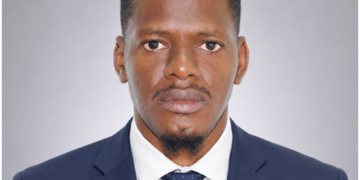




By Ibrahim Sanda Barrie
The Gadfly – Challenging ideas, questioning power, and promoting democratic dialogue
Introduction: Sierra Leone’s Constitutional Moment
Every generation encounters moments when it must decide whether existing institutions remain capable of serving the aspirations of its people. For Sierra Leone, the ongoing constitutional debate represents such a moment.
The question facing the country is not simply whether certain provisions of the 1991 Constitution should be amended. The deeper question is whether Sierra Leone requires another round of technical adjustments or whether the time has come for a broader constitutional refoundation that renews the relationship between citizens and the state.

Since the democratic transitions of the 1990s, African states have faced a recurring challenge: how to balance legal continuity with democratic legitimacy. In many post-authoritarian and post-conflict societies, the central question is not only how to modify constitutional texts but whether those texts possess sufficient public legitimacy to sustain democratic consolidation.
Sierra Leone’s constitutional journey reflects this dilemma.
The Constitution of Sierra Leone, 1991 (Act No. 6 of 1991), emerged during the decline of Major-General Joseph Saidu Momoh’s one-party rule under the All People’s Congress (APC). It was designed to facilitate a transition from a single-party political system to multiparty democracy. However, its adoption coincided with the outbreak of an eleven-year civil war between 1991 and 2002, military interventions and prolonged institutional instability.
Over three decades later, Sierra Leone continues to debate the adequacy of its constitutional framework. Previous efforts, including the 2008 Peter Tucker Constitutional Review Committee and the 2017 Justice Cowan Constitutional Review Committee, identified important areas requiring reform. More recently, the recommendations of the 2023–2024 Tripartite Committee on Electoral and Governance Reforms have reopened fundamental questions about the future direction of constitutional change.
The central question is therefore not simply whether Sierra Leone needs constitutional reform, but what type of reform is required.
Does the country need targeted amendments within the existing constitutional framework? Does it require comprehensive revision? Or does the present moment demand a new constitutional settlement based on broader citizen participation?
This distinction is important.
Constitutional amendment involves changing specific provisions while maintaining the identity of the existing constitutional order. Constitutional refoundation, by contrast, involves a deeper process through which citizens, acting as the primary source of constitutional authority, establish a renewed democratic framework.
This article argues that while the 1991 Constitution achieved important democratic gains, its origins and institutional design created structural weaknesses that continue to affect governance today. Drawing from comparative African constitutional experiences, it examines whether Sierra Leone requires constitutional adjustment or a more fundamental democratic renewal.
Constituent Power and Constitutional Legitimacy
To understand the difference between reform and refoundation, it is necessary to examine the concept of constituent power.
The French constitutional thinker Emmanuel-Joseph Sieyès argued that the authority to create a constitution belongs to the sovereign people. This original authority, known as primary constituent power, exists before the institutions created by the constitution.
Once a constitution is established, institutions such as Parliament, the Presidency and the judiciary operate as constituted powers. Their authority comes from the constitution itself and is therefore limited by constitutional boundaries.
This distinction raises an important question for Sierra Leone: can institutions created under the 1991 Constitution fundamentally redesign the political system, or do major structural changes require direct participation by citizens through a new constitutional process?
Carl Schmitt distinguished between ordinary constitutional amendments and fundamental constitutional transformation. Similarly, Bruce Ackerman’s theory of constitutional moments suggests that societies occasionally experience periods when citizens actively participate in redefining the foundations of political order.
Yash Ghai further argues that in societies emerging from authoritarianism or conflict, the legitimacy of a constitution depends not only on its legal content but also on the inclusiveness of the process through which it is created.
A constitution gains strength when citizens see themselves as authors of the political order rather than merely subjects of a document created by political elites.
The Origins of Sierra Leone’s 1991 Constitution
Understanding the legitimacy debate requires examining how the Constitution came into existence.
Following independence in 1961, Sierra Leone experienced repeated political instability. This culminated in the 1978 Constitution, which transformed the country into a one-party state under the APC government of Siaka Stevens. The system concentrated executive authority, weakened opposition politics and limited democratic competition.
By the late 1980s, economic decline, internal political pressures and international demands for democratic reform pushed President Joseph Saidu Momoh to initiate constitutional change.
In 1990, Momoh established the National Constitution Review Commission, commonly known as the Peter Tucker Commission, to review the one-party constitutional framework and recommend a transition towards multiparty democracy.
The resulting 1991 Constitution represented a major democratic breakthrough. It restored multiparty politics, recognised fundamental rights and established institutions associated with democratic governance.
However, the manner of its creation raises questions about constitutional legitimacy.
Unlike South Africa, Kenya or Namibia, Sierra Leone’s 1991 Constitution was not drafted by an elected Constituent Assembly and was not directly approved by citizens through a national referendum. Instead, it was enacted by the existing Parliament, which itself had been created under the one-party system.
This produced a constitutional paradox: Sierra Leone adopted a multiparty democratic constitution through institutions inherited from a one-party political order.
The Structural Challenges of the 1991 Constitution
While the Constitution restored democracy, several institutional weaknesses have remained.
Executive Dominance
The concentration of executive power remains one of the most debated issues.
The President serves simultaneously as Head of State, Head of Government and Commander-in-Chief of the Armed Forces. Extensive appointment powers over ministers, judges, commissions and senior officials create a highly centralised system of political authority.
This has contributed to what many scholars describe as an “imperial presidency,” where control of executive office becomes the primary pathway to controlling state resources.
Judicial Independence
Although the Constitution guarantees judicial independence, concerns remain regarding the appointment process for judges and the relationship between the judiciary and executive authority.
A stronger constitutional framework could provide greater institutional independence through mechanisms such as an autonomous Judicial Service Commission.
Electoral Governance
Electoral disputes have repeatedly challenged Sierra Leone’s democratic stability. Concerns surrounding the independence, appointment procedures and operational autonomy of electoral institutions demonstrate the need for stronger constitutional safeguards.
Electoral democracy depends not only on voting but also on citizens’ confidence that electoral institutions operate independently and fairly.
Centralisation of Political Authority
Despite decentralisation reforms introduced after the civil war, local governments remain heavily dependent on central government structures.
A stronger constitutional commitment to decentralisation could provide local authorities with clearer powers, resources and institutional protection.
Lessons from Africa’s Constitutional Experiences
Sierra Leone’s constitutional choices should be considered within the broader African experience.
South Africa did not attempt to amend apartheid-era constitutional arrangements. Instead, it created a new constitutional order through negotiations, public participation and an elected Constitutional Assembly.
Kenya’s 2010 Constitution emerged from years of public consultation and culminated in a national referendum. It transformed the country’s governance system by introducing devolution, strengthening judicial independence and limiting presidential authority.
Ghana’s 1992 Constitution demonstrates how a hybrid approach involving consultation, public approval and institutional compromise can produce long-term democratic stability.
Namibia’s 1990 Constitution was developed through an elected Constituent Assembly during the country’s transition to independence and became a foundation for democratic governance.
These experiences demonstrate a common principle: durable constitutions require public ownership.
The Tripartite Committee and the Limits of Political Agreements
The Tripartite Committee established following the 2023 elections represents an important attempt to reduce political tensions and strengthen democratic institutions.
Political dialogue between parties is necessary for democratic stability. However, a political agreement between parties cannot replace the constitutional authority of citizens.
Political settlements address immediate political challenges. Constitutions establish the long-term rules of governance.
The danger is that constitutional reform becomes a negotiation between political elites rather than a national conversation involving citizens.
The APC and SLPP must participate in constitutional discussions, but Sierra Leone’s constitutional future cannot belong only to the two largest political parties.
Smaller political parties, civil society organisations, traditional leaders, youth groups, women’s organisations and ordinary citizens must have meaningful influence over the process.
The Need for a People-Centred Constitutional Process
The most important question facing Sierra Leone may not only be what constitutional changes are required, but whether the current method of reform can produce legitimate outcomes.
A credible constitutional process must be:
Independent, so that no political institution dominates the process.
Inclusive, ensuring participation from all sections of society.
Evidence-based, using research and citizens’ experiences to identify problems.
Transparent, allowing citizens to understand how decisions are reached.
Nationally owned, ensuring the final outcome reflects the aspirations of Sierra Leoneans.
Constitutional reform should not begin with the question: “What changes do political actors want?”
It should begin with the question:
“What kind of democratic system do Sierra Leoneans want for future generations?”
Conclusion: Towards Constitutional Refoundation
The debate about Sierra Leone’s constitutional future is ultimately a debate about democratic legitimacy.
The 1991 Constitution played a historic role in restoring multiparty democracy and establishing a framework for democratic governance. However, its origins and institutional design created weaknesses that continue to shape political competition and governance today.
Comparative African experiences demonstrate that constitutional endurance depends not only on legal procedures but also on public ownership.
For Sierra Leone, the choice is therefore not simply between keeping the existing Constitution or replacing it entirely. The real challenge is creating a constitutional process that allows citizens to decide what future they want.
The Tripartite Committee can contribute to political stability. Parliamentary amendments can address technical issues. But neither can replace the sovereign authority of the people.
A constitution is not merely a legal document.
It is a national promise.
And if Sierra Leone chooses to renew that promise, the process must begin where democratic legitimacy begins: with the people.
About the Author: Ibrahim Sanda Barrie is a polymathic researcher, peacebuilding savant, perspicacious writer, governance theorist, indefatigable advocate, and institutional reformist.